




























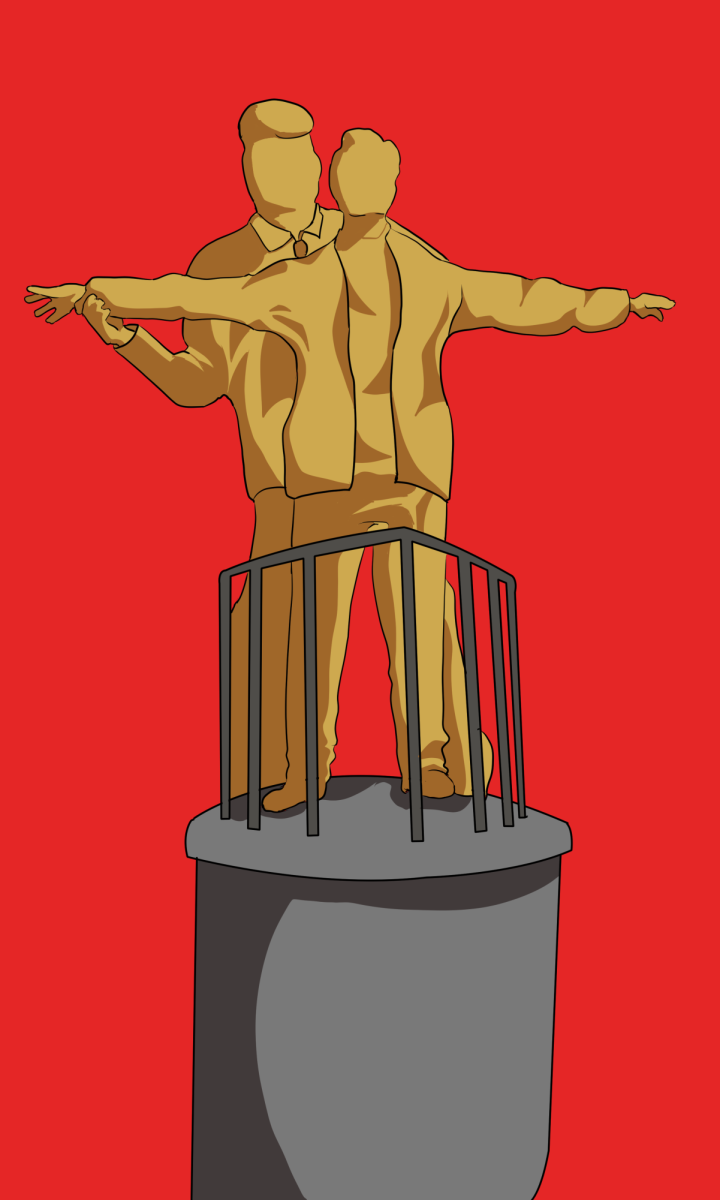
On March 10, a statue titled “King of the World” was placed at the National Mall in Washington, D.C. The statue, depicting President Donald Trump and Jeffrey Epstein in the famous Jack and Rose pose from James Cameron’s “Titanic,” quickly sparked controversy. Some dismissed it as “distasteful,” while others, like Don Powell, a resident of Washington, D.C., defended it as a satirical form of protest art, stating, “With the assault on the First Amendment, what’s getting through is comedians and artists.” Regardless of political belief, the statue highlights something deeper about the role of public art in politics. Throughout history, statues and monuments have been used to celebrate power but also to challenge it.
The statue’s title is intentional. In “Titanic,” the phrase symbolized a moment of triumph and dominance, but in the context of the statue, it becomes a critique of power itself. The statue’s plaque reads: “The tragic love story between Jack and Rose was built on luxurious travel, raucous parties and secret nude sketches. This monument honors the bond between Donald Trump and Jeffrey Epstein, a friendship seemingly built on luxurious travel, raucous parties and secret nude sketches.”
In the United States, the idea of leaders behaving like kings has always carried political weight. The country was founded in direct opposition to the British monarchy during the American Revolution, and, because of this history, Americans have long been wary of individuals accumulating too much authority. This sentiment continues to appear in movements such as the “No Kings” protests.
Protest art reflects this tension. Statues are typically meant to honor historical figures, but they can also be used to question the systems those figures represent. For example, during the 1989 Tiananmen Square protests, student demonstrators constructed the “Goddess of Democracy” as a symbol of resistance.
Whether people see it as satire, provocation or poor taste, the statue serves the same purpose protest art has always served: forcing the public to confront uncomfortable questions about power, accountability and who society chooses to elevate. In a country founded on rejecting kings, perhaps that conversation is exactly the point.

Paula Grogan • Mar 19, 2026 at 12:36 pm
Brilliant Bianca, wonderful read !!!!