

















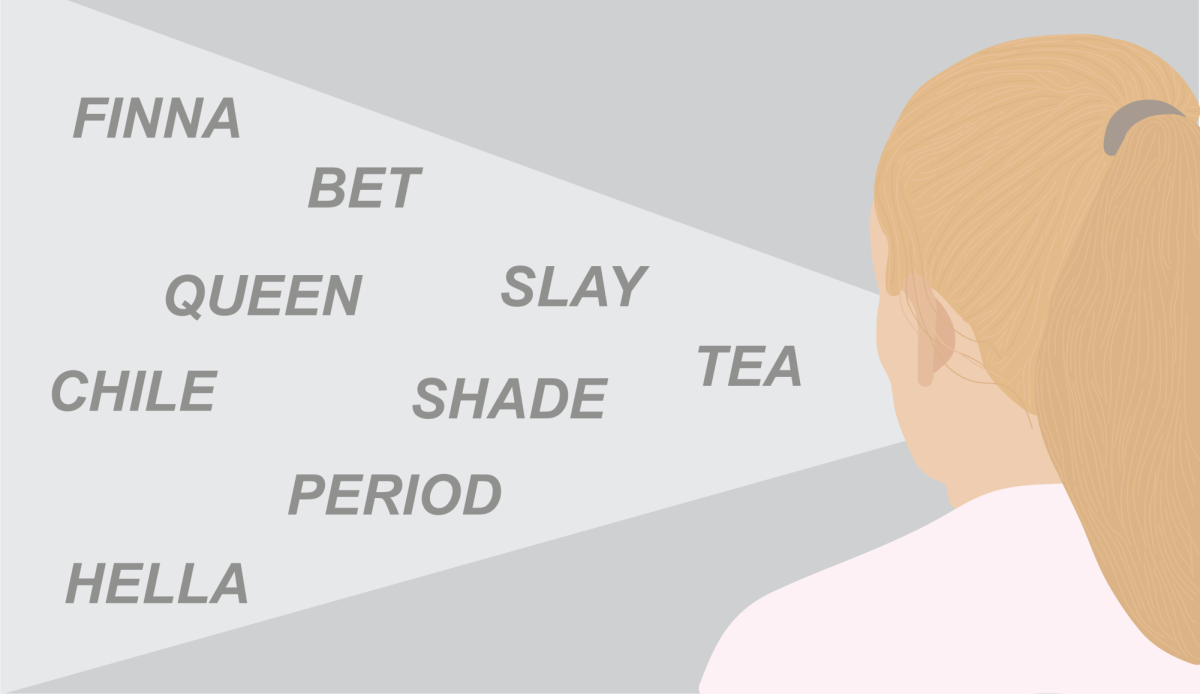
Sitting in class one day, I eavesdropped on a conversation next to me by a group of white women and was very confused when I heard some of the words they were using. Whether they used a simple “finna” or a shocking “chile,” I couldn’t help but wonder if they spoke to anyone else the same way they spoke now.
It always confuses me when I hear white people talk like this because I only heard Black people say these words growing up. I was told this language wasn’t “proper” English, and I couldn’t talk to older folks, people in higher authority or anyone who wasn’t my friend using “slang.”
However, this “slang” has become more popular outside of my direct community because people, specifically white people, have been using African American Vernacular English and have essentially rebranded it as Generation Z slang.
This change from calling it “AAVE” to “Gen Z slang” may seem small or insignificant, but at its core, it is the erasure of the Black personality. Words and phrases Black people have created or popularized are taken by people outside the culture and transformed into something more “suitable” for the general public.
After the death of Trayvon Martin, Martin’s friend, Rachel Jeantel, took the stand during his murder trial to testify. Jeantel spoke in AAVE during her testimony, which led to jurors, media sources and racists treating her as an unreliable witness solely due to the way she spoke.
When Black people use AAVE, they are considered “ghetto” or “stupid,” but when white people steal this dialogue, they are trendy and participating in Gen Z talk. This is whitewashing at its finest: taking the language developed by Black Americans, degrading it and then, over time, beginning to use it and claim it as your own, ignoring many of its original conventions.
It is jarring to see people begin to “develop” the language I was told to code-switch out of. Words people can’t even define or use in their proper contexts are just thrown around, losing their meaning and being considered “brain rot,” “buzzwords” or “improper” speech.
