














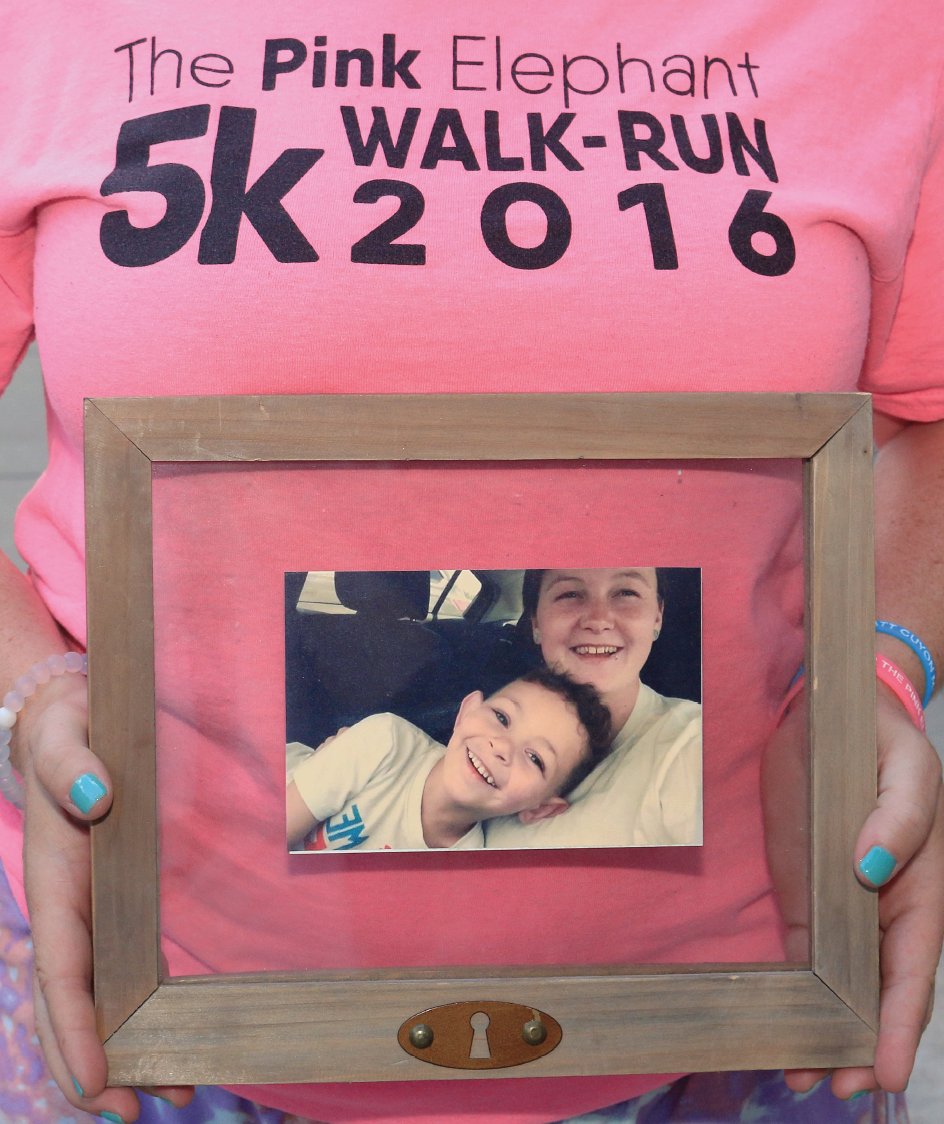







When Megan Armbruster ’24, M.S. ’26, entered her senior year of high school, she began noticing changes in her mother’s behavior.
“She was nodding off at the table, had suspicious friends over,” Armbruster recalled.
It wasn’t until Armbruster moved out of her mother’s house and into her father’s that she learned the extent of what her mother was going through. Her father told her that her mother had been struggling with addiction since Armbruster was a child.
“That opened my eyes to, ‘OK, this wasn’t out of nowhere,” Armbruster said. “She wasn’t abusing and using drugs when I was just in high school or just in that era of my life. It was a lifetime thing that she’s been doing.’”
Armbruster is not alone. Roughly 44% of Philadelphians know someone with substance use disorder, and one in three Philadelphians know someone who has died from an overdose, according to The Pew Charitable Trusts’ 2025 Philadelphia Resident Survey.
Experience doesn’t necessarily translate into understanding, however, and that misunderstanding often shows up in the language used to talk about substance use disorder and those affected by it. Words like “addict” and “abuser” remain widespread, carrying connotations that can reinforce stigma rather than empathy.
“People who struggle with drugs and alcohol, they’re already outcasts in so many ways, and it’s easy to further ostracize this population,” said Christopher Kelly, Ph.D., professor of sociology. “One way we do that is through the language [we use].”
Armbruster said she’s noticed how easy it is to fall into this pattern herself. While she catches herself using this kind of terminology when talking about her mother, she’s trying to stray away from it.
Context and intent matters, too, Armbruster said.
“It’s never comfortable talking with or about someone who is actively struggling with addiction,” Armbruster said. “I can say to a team of care people about my mother, ‘FYI, she’s an addict,’ but I think, on the vice versa, when somebody turns around to me and says, ‘Your mother’s an addict,’ that sits differently with me.”
A 2023 study published in the Drug Alcohol Dependence journal examining news articles, blogs, X posts and Reddit posts from the United States and other English-speaking countries found while stigmatizing language about addiction decreased by 68.2% in news articles and 33.6% in blogs from 2017 to 2021, it increased by 43.5% on X (formerly Twitter) and remained stable on Reddit. Terms including “addict,” “drug abuser” and “substance abuser” were most commonly found.
Nick Escurra, 23, of Delaware County, has struggled with addiction since he was prescribed Adderall at 12 years old. His experiences with Adderall “messed up” his emotional development and caused him to isolate himself from others, he said.
Escurra said there are consequences to the way people talk about substance use disorder.
“It causes more harm than good,” Escurra said. “It destroys someone’s mindset by being called rude and inconsiderate names.”
This stigmatizing language, according to Kelly, doesn’t just shape how society views people with substance use disorder. It can also have an internalization effect on those individuals, influencing how they see themselves.
“When we label somebody as an ‘addict’ or a ‘junkie’ or a ‘crackhead,’ it just further entrenches their secondary status in society,” Kelly said. “But it also gives them something that they can bond with other people who have been similarly labeled, and it reinforces an identity that I think most people, including themselves, would say is not the most healthy or productive.”
The National Institute on Drug Abuse advises people to ask those with substance use disorder how they want to refer to themselves. While some may choose to refer to themselves with those terms as a form of personal identification or reclamation, others should not impose those labels on them.
Jonathan Stoltman, Ph.D., co-founder and co-director of Reporting on Addiction, is at the forefront of a mission to shift how substance use disorder is discussed. Stoltman, who has been doing addiction-related research for over a decade, saw that current reporting often resulted in stigma and discrimination faced by people who use drugs.
In an effort to improve how substance use disorder is reported in the media, Stoltman and Ashton Marra, associate professor of journalism at West Virginia University, co-founded Reporting on Addiction in 2020.
Reporting on Addiction is a collaboration between journalists, educators and addiction experts who work to improve media coverage of substance use disorder by reducing stigma, promoting evidence-based reporting and highlighting hope, treatment and recovery. It provides training, resources and guidance to ensure reporting reflects current science and treats people affected by substance use disorder with empathy and accuracy.
“If we can tell more stories that are empathetic, that help the audience actually understand that these are people that need help, they need support, they need services and we are failing them by not providing those things then we think that can help, ideally, reduce some of that dehumanization going forward,” Stoltman said.
In the end, it’s not just about words. Feeling judged or dehumanized often discourages people with substance use disorder from seeking treatment, according to the National Institute on Drug Abuse. Additionally, stigma can shape how healthcare providers perceive and respond to those with substance use disorder, sometimes resulting in lower-quality and discriminatory care.
“When we reduce stigma, we can increase access to care,” Stoltman said. “But we can also increase community understanding of this issue so that they can think more broadly about those different solutions.”
This is the second story in a series by Cara Santilli ’24, M.A. ’26, about issues related to substance use disorder in the Philadelphia community, how the media reports on those issues and what community members can do to help.
Editor’s Note: Associated Press Style standard practice is to use the term “addiction” when referring to a treatable disease that affects a person’s brain and behavior. This story uses terminology preferred by medical and health professionals to reduce stigma and accurately reflect the medical understanding of substance use disorder.
Members of the St. Joe’s community seeking support are encouraged to contact the following resources:
Counseling and Psychological Services (CAPS), 610-660-1090
Campus Ministry, 610-660-1030
The Office of Student Outreach & Support, 610-660-1149
The Jesuit community, 610-660-1400
Employee Assistance Program, 866-799-2728