








When Amber Abbas, Ph.D., was in graduate school at the University of Texas at Austin teaching a course on South Asian migration to the U.S., she designed a lesson plan about recording oral histories of South Asian American migrants.
There was one story she really wanted to tell herself: the story of her father, Tariq Abbas, a Pakistani-American immigrant who came to the U.S. as a foreign exchange high school student in 1960.
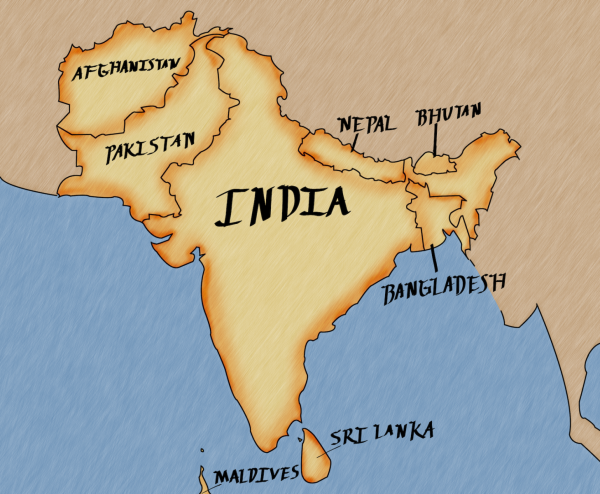
One day during that semester, Abbas received a message about the South Asian American Digital Archive — a public online archive founded in 2008 that collects the stories of living and deceased South Asian Americans. It is the largest archive of South Asian American history. South Asian countries reflected in the archive include India, Pakistan, Bangladesh, Afghanistan, Nepal, Sri Lanka, Bhutan and the Maldives.
The archive did not yet have any oral history stories, only written documents.
“I just wrote them an email, and I said, ‘Hi. I see that you have started this archive. I think it’s great. Are you interested in oral histories?” recounted Abbas, now associate professor of history and director of the Nealis Program in Asian Studies at St. Joe’s.
Just over 20 minutes later, Abbas heard back from Samip Mallick, founder and executive director of SAADA, who said yes.
The interview, recorded in 2011, was the first in SAADA’s oral history collection, now totaling 480.
For Abbas, the interview is more than an important scholarly contribution. It’s a deeply personal memento.
“My dad died in November of 2013, so that interview I did with him in 2011 was the only time I ever interviewed him,” Abbas said. “It was right before we found out that he was sick … it means that anytime I want to hear my dad talking to me, I can listen to him.”
The story of Abbas’ father is just one of many accounts of South Asian American community history and identity. Mallick was on a search of his own to understand his South Asian American identity when he got the idea to create a South Asian American-focused archive.
“The reality is, I grew up in Michigan, and I didn’t really know anything about my community story,” Mallick said.
As Mallick began to uncover South Asian American history, his findings shocked him. Mallick was “completely blown away” to learn South Asian American history extended back centuries, with South Asians immigrating to the U.S. as early as the 19th century. He was entirely unaware that South Asian American history started many decades before his parents immigrated in the 1960s.
“That completely transformed how I understood not just myself and my community’s place in the American story but the American story at large,” Mallick said. “I think it made me also question why it is that I didn’t learn these histories.”
Mallick’s ambition to share South Asian American stories ultimately led him to co-found SAADA with Michelle Caswell, Ph.D., professor of archival studies in the department of information studies at the University of California, Los Angeles.
“You can’t fully tell the American story without including immigrants, communities of color, broadly, but also South Asian Americans, specifically,” Mallick said. “South Asian American history is actually essential to understanding the American story.”
Mallick also wanted others to feel less alone.
“SAADA is about creating the resources for the world that I wished existed when I was young,” Mallick said.
Collecting history
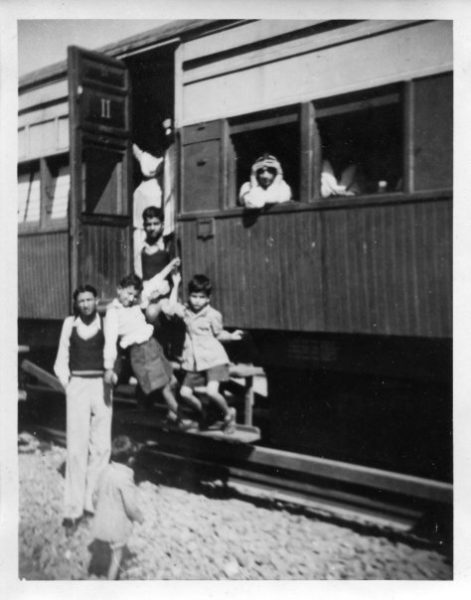
SAADA’s collection currently features 5,400 unique oral and physical artifacts. These items include photographs, newspaper clippings, letters and other pieces of history that capture different South Asian American and immigrant experiences.
“If you spend some time poking around in the SAADA collection, the breadth of the diversity of our communities really shows,” Abbas said.
One way SAADA collects South Asian American stories is through their fellowships program, which invites individuals to conduct a project where they interview members of their own community.
Aleah Ranjitsingh, Ph.D., assistant professor of Caribbean Studies in the Africana Studies Department at Brooklyn College, documented the experiences of her community — the Dougla community — through her fellowship with SAADA. Dougla people are Caribbean people of mixed Indian and African heritage.
When Ranjitsingh saw the annual fellowship’s theme was “intersections,” she knew she had to take the opportunity.
“Douglas are at the intersections of so many things: race, ethnicity, experiences of inbetweenness, etc.,” Ranjitsingh said. “I applied, and I was accepted. I think it’s through that acceptance and being part of that fellowship that my relationship with SAADA very much strengthened.”
Ranjitsingh, who said SAADA helped train her to be an oral historian, interviewed seven people for her project “Dougla Lives: At the Intersections.” The process of collecting stories, Ranjitsingh said, was one of “emotional labor” as she could “feel everything that they are feeling.”
“Oftentimes, immigrant stories, or even human stories, are stories of trauma,” Ranjitsingh said. “And then myself being Douglas as well, there are some things that people, some experiences that it talked about in terms of being mixed race and feeling in between or being denied by family members because of being mixed with black, etc., that I had experienced, too. And I felt it.”
Filling the gaps
As the largest archive of South Asian American stories, part of SAADA’s work is collecting stories that have not been a focal point of other archival institutions.
“South Asian Americans and other immigrant communities … for a variety of reasons, I would say, have not been prioritized in collecting by dominant and mainstream archival institutions,” Mallick said. “It’s often been community-based archives like SAADA and the thousands of others that exist across this country and around the world that have been advocates for and preservers of these histories.”
SAADA, Abbas said, centers inclusion and makes a distinct effort to collect the stories of underrepresented and marginalized groups.
“SAADA’s outlook is definitively liberatory in the sense that the goal is really to push back against the existing power structures that led to the marginalization of South Asian American communities in archival spaces in the first place,” Abbas said. “Part of what that means is we’re not going to be content to just go interview people who come from economically dominant backgrounds or caste dominant backgrounds.”
One element of SAADA’s work is correcting misconceptions about South Asian American history. For example, Mallick said there was previous historical consensus that there were only 20 to 30 South Asian women immigrants in the U.S. prior to 1947. In the process of uncovering the stories of these women, SAADA discovered that this number was significantly off.
“As we began this process of sharing their stories, we began to realize that there are actually so many other South Asian women who were here that have been completely erased from historical record,” Mallick said.
The archive found there were actually over 750 women who were in the U.S. during that period, meaning hundreds “would essentially be entirely forgotten” without SAADA’s research.
Discoveries like this, Mallick said, trigger a variety of emotions.
“On the one hand, it’s the feeling of ‘This is incredible to learn this and to be able to share this,’” Mallick said. “But the more painful part of it is, ‘How did this happen? Why have these people been forgotten?’”
Identity and personal impact
Because Mallick felt like he didn’t fit into the American story, he hopes South Asian Americans reading the archive know they have a place and always have.
“People, because they have been told that they don’t belong, begin to believe that they don’t belong … To get to hear from so many people [that] what SAADA does helps them feel a deeper sense of belonging or connection, that’s just a remarkable thing to get to be part of.”
Abbas, who is half Pakistani and half white American, said the only people she knew growing up who shared her heritage were her two sisters. As a mixed person, she felt like she didn’t have a space to belong in, considered either not “white enough” or not “brown enough.” Abbas said SAADA made her feel “fully included in the wholeness” of herself.
“Since I got involved with SAADA, now I meet all these other people who are like me, either who are South Asian and raised in the United States, or many, many people who are mixed, just like me, who are also looking for this community,” Abbas said.
Mallick said learning his community’s history has made him feel a deeper sense of personal belonging in American history. He called alleviating the pain that comes from a lack of community is his biggest ambition.
“You don’t always recognize that the thing that you’re desperately searching for, so many other people are as well until you find the thing together,” Mallick said.
Mallick hopes he can alleviate the feelings of exclusion from other South Asian Americans, like his nine-year-old daughter.
“My greatest aspiration is that she grows up in a world, as do all young South Asian Americans, where they don’t have to question their belonging,” Mallick said.
This is the third article in a series by Hannah Pajtis ’26 that highlights immigration-related stories from the Philadelphia area.