












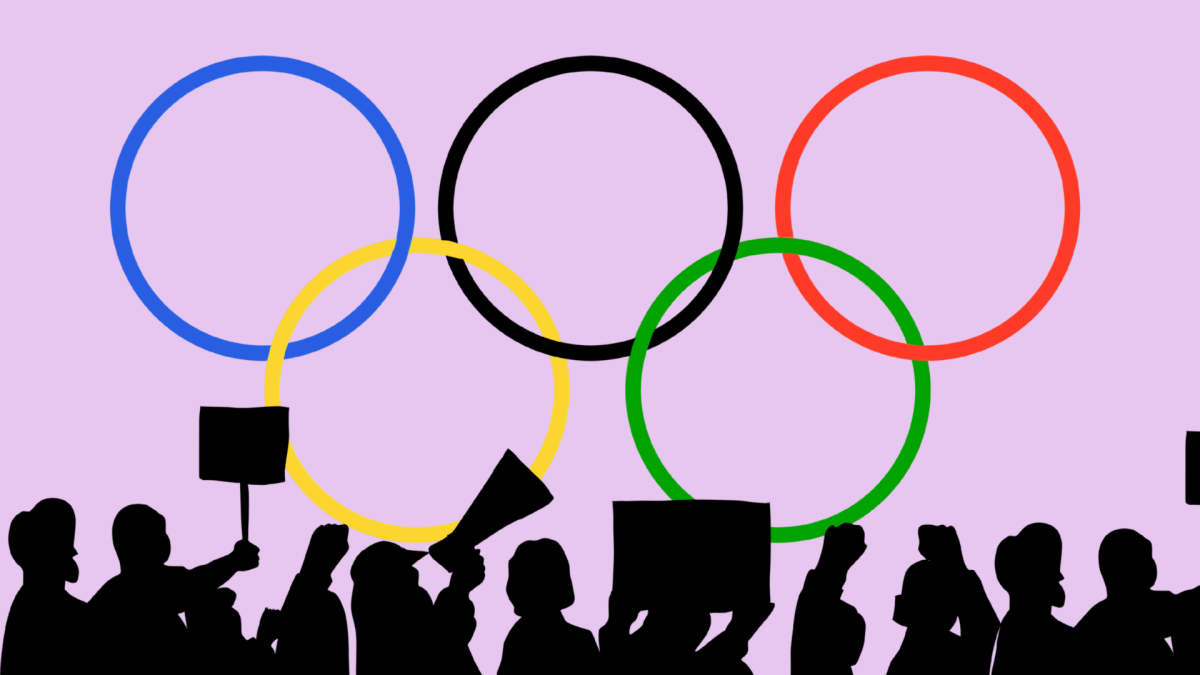
The Olympics are meant to be a celebration of unity, and in Milan this year, much of the attention is on the protesters challenging the policies of a country they’re not from.
Across our country, media coverage has reflected widespread criticism of how Immigration and Customs Enforcement agents have treated immigrants and allies, especially in Minneapolis, Minnesota. Ranging from children, such as Liam Conejo Ramos, a 5-year-old boy detained by ICE in Minnesota along with his father, to the killing of Renée Nicole Good, a 37-year-old Minneapolis resident and mother of three, our country has lost sight of being “the land of the free.” We are not the only country noticing that we are falling short of this mantra.
The Olympic streets have been filled with ongoing protests because of the deployment of ICE agents as security at the Games. Milan’s mayor, Giuseppe Sala, told RTL radio that the agents would not be welcome in the city because they have not guaranteed they are aligned with Milan’s “democratic security management methods.”
Sala went on to say, “This is a militia that kills. It’s clear that they are not welcome in Milan … We don’t need ICE.” With statements like this coming from other international politicians, it is clear there needs to be change in our country.
ICE has previously been part of the Olympics and other major sports events because they are involved in international partnerships focused on issues like human trafficking and drug smuggling, which fall under the agency’s Homeland Security Investigations division. However, due to the current controversies surrounding ICE agents in the U.S., this deployment has become one of the most publicly controversial. Protester Silvana Grassi commented, “Even if it’s not the same ones, we don’t want them here.” Grassi also referred to ICE as the Gestapo — the secret state police of Nazi Germany.
Protests abroad erupting in response to American policies should serve as a wake-up call: The world is watching how this administration handles fundamental human rights, and those perceptions increasingly shape how the U.S. is judged on the global stage.
