











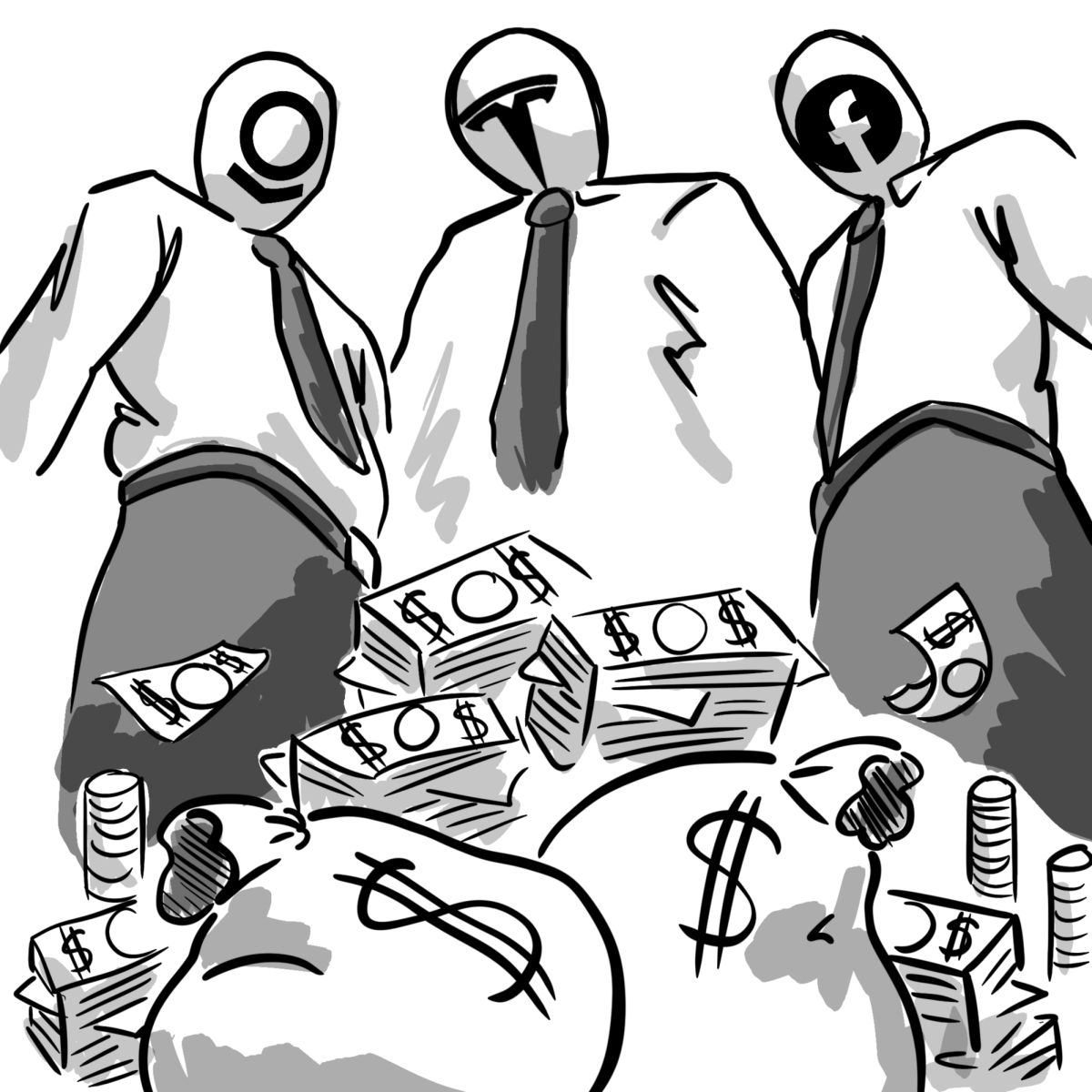
Days before President Joe Biden was set to leave office, he warned the American people about the formation of an oligarchy made up of the ultra-wealthy who only see the world as an opportunity for profit. The growing threat of the wealthy buying influence has been around for decades, but, in recent years, it has seemingly grown worse.
In the 2022 midterms, Republican mega-donor Peter Thiel, whose estimated net worth is about $29.7 billion, spent $15 million to help JD Vance, his former employee, obtain the Republican nomination for the U.S. Senate election in Ohio. Despite Vance’s longtime criticism of President Donald Trump, Thiel introduced Vance to him, leading to Trump eventually choosing Vance as his vice president. The rapidity of these events prove that with enough money, you can easily get a quick return on investment in politics.
Billionaires like Elon Musk, Alex Karp and Mark Zuckerberg represent this new kind of political actor. They’re not just lobbyists fighting for some extra influence behind the scenes; they’re openly taking over our system. Through control of platforms like X, billionaires shape what people see and how political conversations unfold. Through companies like Meta, they influence how information spreads and how billions engage with politics. Will our government run the algorithm?
Simultaneously, companies like Palantir Technologies maintain close ties to the U.S. military and intelligence community. This has blurred the line between private business and state power, raising concerns about accountability when private firms help manage sensitive data and surveillance systems. Who’s watching us?
What’s scarier? They don’t want the best for us. When Thiel was asked if he’d like “the human race to endure,” he struggled to answer. The most powerful unelected people don’t care if we die or not. We’re simply toys they’re ready to throw away if need be.
Biden’s warning about an emerging oligarchy wasn’t just rhetorical. It reflects a scary reality: Wealth is no longer just influencing politics; it’s becoming embedded in our everyday lives. The world we grew up in is disappearing, and every day, we’re losing a little more.
