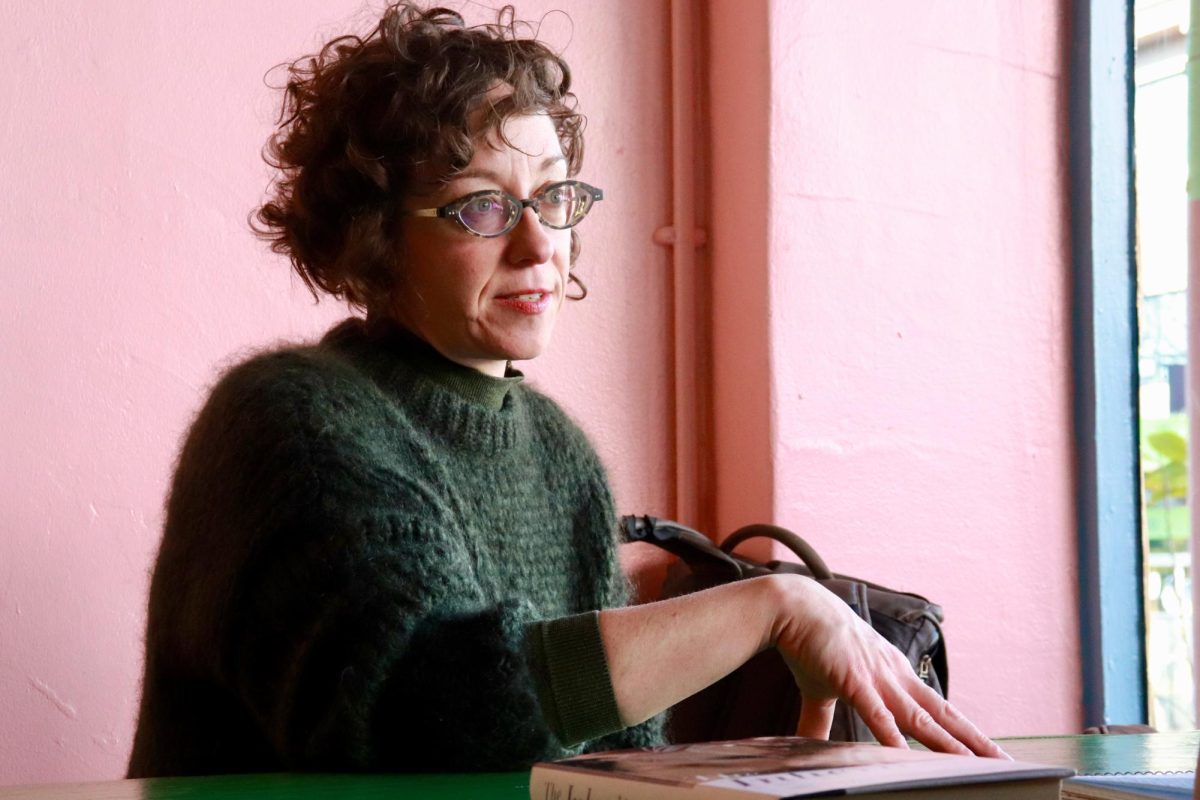














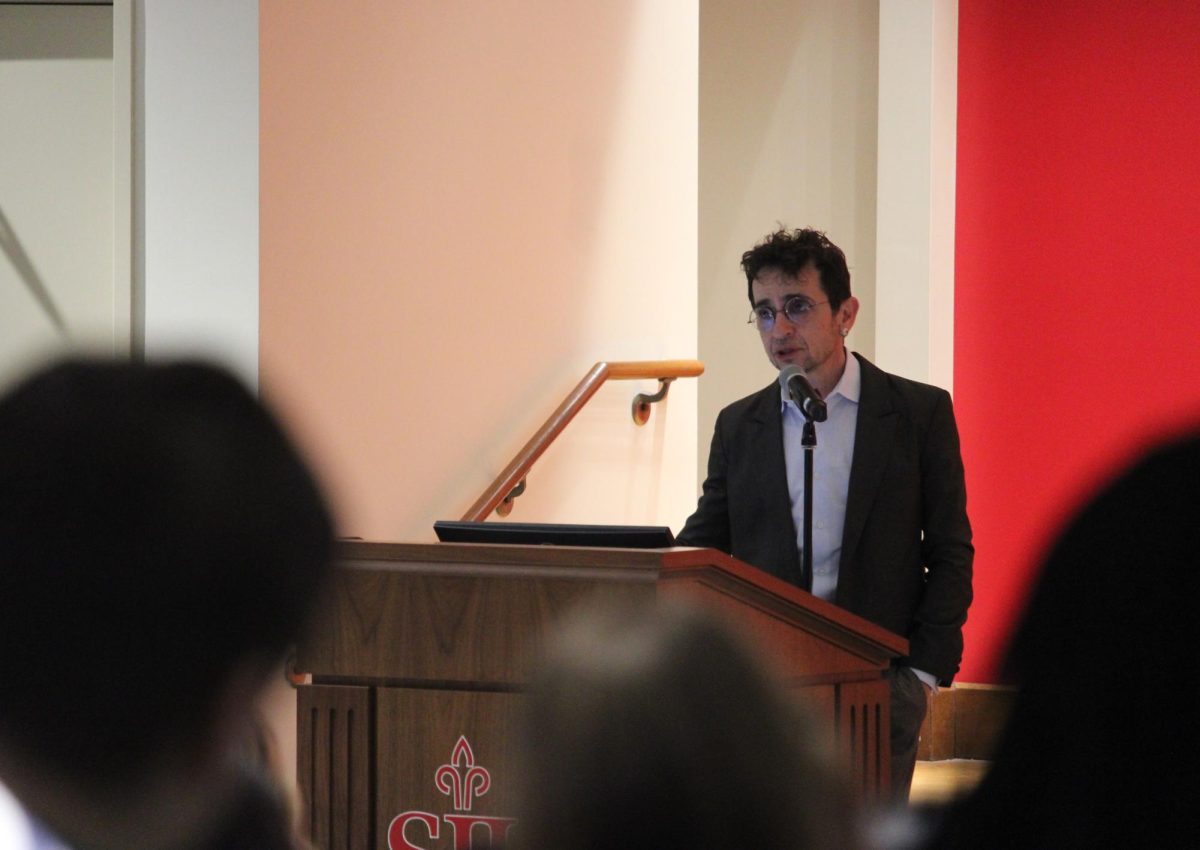
The Misher Festival of Arts and Humanities hosted M. Gessen for a visiting professor lecture March 19. Gessen, an award-winning opinions columnist for the New York Times, former writer at the New Yorker and National Book Award Winner, gave a lecture connected to the Misher Festival’s theme of “FREEDOMS.”
Gessen’s writing covers topics like Russian totalitarianism. Their book, “The Future is History: How Totalitarianism Reclaimed Russia” won the 2017 National Book Award in nonfiction, and “The Man Without a Face: The Unlikely Rise of Vladimir Putin” was written from Gessen’s experiences in Moscow observing Putin’s climb to power while they were while working as a journalist and editor for two decades.
Gessen’s talk focused on “parallel polis,” the idea that people can resist totalitarian regimes by building parallel communities and systems that exist outside of their regimes. Gessen said they wanted to focus on parallel polis in their writing to create projects that gave them hope after writing about totalitarianism for so long.
“I’ve been thinking a lot about [parallel polis] for many years, as both an illustration of the idea of hope and the nature of political hope and in a way of thinking about acting politically when political action seems to be impossible, and obviously a way of thinking about freedom,” Gessen said.
Gessen spoke about the history of parallel polis projects in Russia, Czechoslovakia, Colombia, Israel and Palestine, but they also spoke about projects that have existed in the United States. Czechoslovakia separated into two countries, the Czech Republic and Slovakia, in 1993, in what is known as the Velvet Divorce.
“The parallel polis model is applicable not just to totalitarian countries,” Gessen said. “It’s actually applicable to any political situation in which the existing structures do not give people the ability to create or to exercise the freedoms that they need to exercise,” Gessen said.
Christine Flanagan, MFA, professor of English and committee member for the Misher Festival, said Gessen’s talk was still “percolating” with her and gave her some hope in a political time where she feels “the world around us is on fire.”
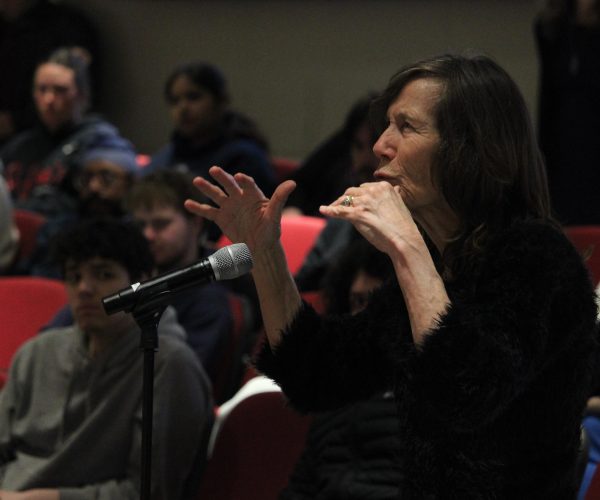
“Gessen’s talk, instead of making me more upset, made me more hopeful and made me think more deeply about, ‘What do I want to do, and how do I want to do it?’” Flanagan said.
Katherine Sibley, Ph.D., professor of history, said Gessen’s talk resonated with her because she was a historian and student toward the end of the Soviet Union. Sibley thought it was interesting to hear Gessen discuss how Polish and Czechoslovakian leaders came together and played an important role in ending the Soviet Union.
“The theme in our talk was freedom, and it would have been very easy for Gessen to give a talk about how difficult things are at the moment, and they are,” Sibley said. “But there was also this discussion about possibility and transcending that, and I love that.”
Flanagan said many of this year’s Misher Festival events — including Gessen’s talk — touched on “third rail” issues, which are political topics people avoid discussing because they are considered extremely difficult.
Flanagan said she wasn’t surprised by how well the St. Joe’s community handled these discussions.
“Event after event I went to was just thoughtful, civil, interested, made me more curious, made me appreciate the faculty at St. Joe’s, made me appreciate the students even more at St. Joe’s,” Flanagan said.