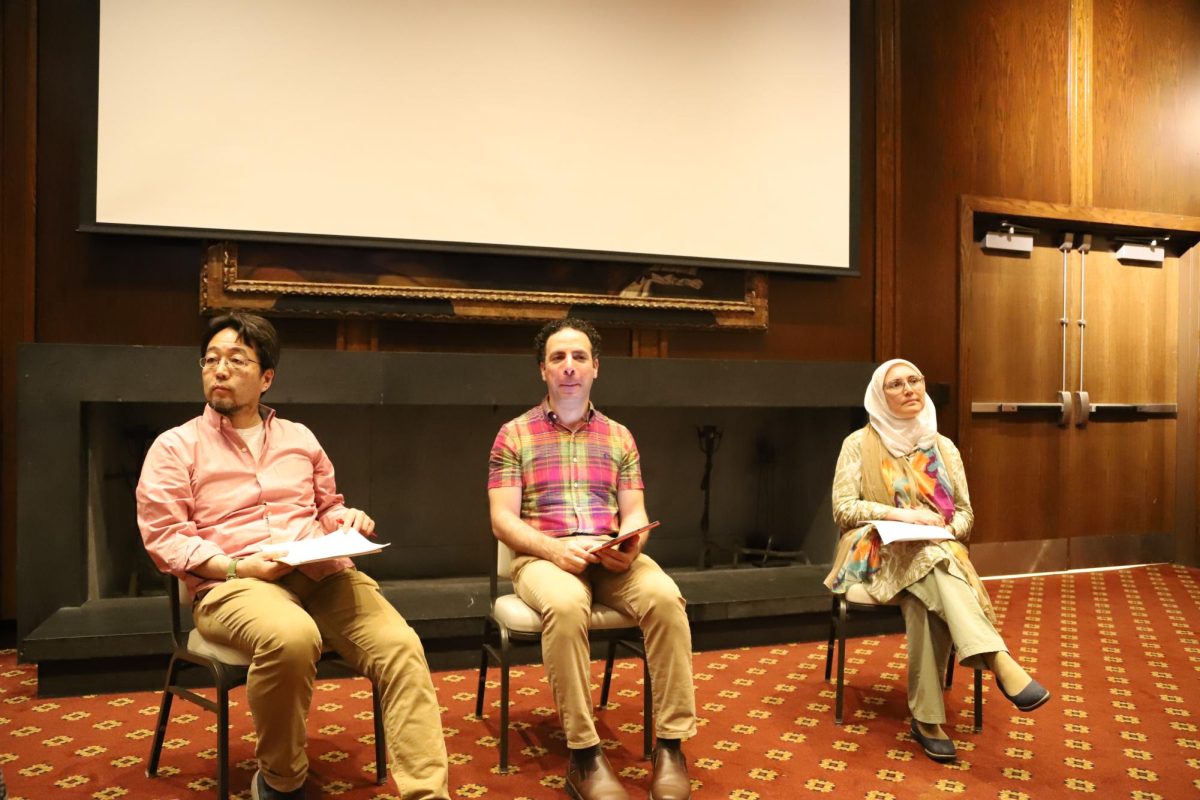




























Campus organizations tasked with addressing students’ basic needs are working to meet the increased demand caused by recent reductions and pauses in the Supplemental Nutrition Assistance Program.
The federal government suspended funding for SNAP Nov. 1 due to the government shutdown.
SNAP, which provides money to low-income Americans to purchase food, supports 42 million Americans. Roughly 472,000 Philadelphia residents, or 30% of Philadelphia’s population, rely on SNAP.
Since the shutdown began, SNAP has been the subject of many legal battles over whether the federal government should continue to provide benefits or how much should be provided.
U.S. District Judge John McConnell ordered the Trump administration to make full payments to SNAP recipients Nov. 6. Pennsylvania Governor Josh Shaprio’s office announced Nov. 7 that the Shapiro administration would immediately issue full SNAP benefits to Pennsylvania residents who had not received their SNAP payment.
The Supreme Court then issued a pause to judge McConnell’s order in the late evening of Nov. 7.
Hundreds of students or their family members across all three campuses receive SNAP benefits, according to Elizabeth Lee, Ph.D., associate professor of sociology and inclusive excellence faculty liaison.
“There’s a lot of concern on the part of students who either rely on SNAP themselves or who live with, or perhaps support, family members who rely on SNAP,” Lee said.
Becki Scola, Ph.D., associate provost of inclusive excellence and institutional effectiveness, and Ross Radish, J.D., vice president of student life and dean of students, issued an announcement to students and faculty Nov. 7. In the announcement, Scola and Radish highlighted on-and off-campus resources for members of the St. Joe’s community to utilize, as well as resources where community members can donate.
“We are working to organize other resources to mitigate this challenge and support members of our University community who are experiencing food insecurity,” the announcement said.
Sage Olnick, academic success coach in the School of Nursing and Allied Health on the Lancaster campus, said she has heard concerns from students.
“A lot of our students are parents, or they are caring for parents,” Olnick said. “They’re often working, but because of their commitment to their academics, they may have stepped back in hours, and so because of that, we have absolutely heard from students who rely on SNAP benefits and other forms of assistance to help them make ends meet.”
Use of on-campus resources like HawkHUB has increased this semester, especially just before and after the pause in benefits, said Jenny Spinner, Ph.D., professor of English and faculty director of HawkHUB, the university’s food and basic needs resource center.
HawkHUB experienced a 50% increase in walk-in users across all of its locations from Oct. 20 to Nov. 9, according to data compiled by Joseph Pepe ’27, a member of HawkHUB’s data and evaluation team. Spinner said the increase does not include online HawkHUB orders, and added that usage of community sites where HawkHUB volunteers has also increased.
“A lot of the discussion about food insecurity on college campuses is about how invisible it is,” Spinner said. “It’s definitely more visible right now, not just at St. Joe’s but in the community at large.”
Stephanie Hentz, clinical instructor and director of HawkHUB on the Lancaster campus, said she has noticed this increase in HawkHUB’s usage on the Lancaster campus. Hentz wrote in an email to The Hawk that students primarily utilize the online order option, and the items requested are “more meal-type items,” like pasta, sauce, soups, rice, oatmeal and tuna, as well as hygiene products.
Lee said the university is also concerned with students experiencing stress and anxiety because they are worried about securing their next meals.
“We’re very sensitive to the fact that when there is food insecurity, it also has other kinds of implications than just the insecurity itself,” Lee said.
The Student in Need Fund, which is also a listed resource in the Nov. 7 email, is part of the Student Success Center. The fund allows students to receive meal swipes, loaner computers and emergency expenses.
Kim Allen-Stuck, Ph.D., assistant vice president of student success and educational support, said as of Nov. 10, there have been seven requests made via the Students in Need fund since the university email was sent. Allen-Stuck called this number “an uptick for this time of year.” At the end of the spring 2025 semester, 197 meal swipes were donated, and there are currently 136 remaining, according to Allen-Stuck.
Spinner said HawkHUB is funded solely through donations and grants.
“We’re feeling a lot of pressure, the pressure that comes from wanting to serve to meet this moment of need,” Spinner said. “I spend a lot of my waking hours worrying about our capacity to do this, but we’re giving it everything we have. We don’t want anyone in our community to go hungry.”
In addition to continuing its on-campus efforts, HawkHUB is also working to make sure people across St. Joe’s are aware of other resources that can help, said Oscar Nama ’27, co-president of HawkHUB.
“We’ve also been doing more social media outreach … trying to get more eyes on other resources around so that people at University City or Lancaster or around here know that there are other resources besides HawkHUB,” Nama said.
Olnick said the St. Joe’s community needs to come together to help those impacted.
“[We need to creatively think] through how we as an institution, how we as one university, can work together so that food insecurity and basic needs do not become a barrier to our students’ success and progression throughout their academic programs so that they can reach their goals and serve our community,” Olnick said.
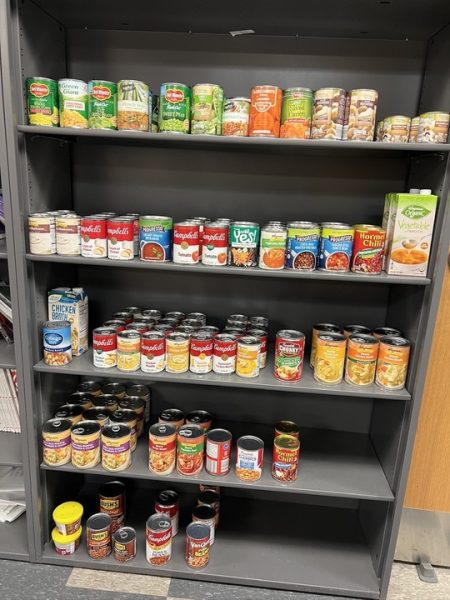
One way community members can get involved, according to Hentz, is through donations.
“Members of the St. Joe’s community can help by considering [donating] canned goods, nonperishable items and hygiene products to the HawkHUB,” Hentz said.
Olnick said students’ ability to meet their needs is as important as their academic success, and the university’s response to this moment is rooted in the Jesuit mission.
“When we think about what cura personalis means and caring for the whole person, I think part of that requires us to attend to students’ ability to access basic needs and resources that they need, not only to just live a healthy life but also to grow and have a positive impact on the world,” Olnick said. “To me, the biggest concern is their health, their well being and their ability to continue to reach the goal that brought them here in the first place.”