


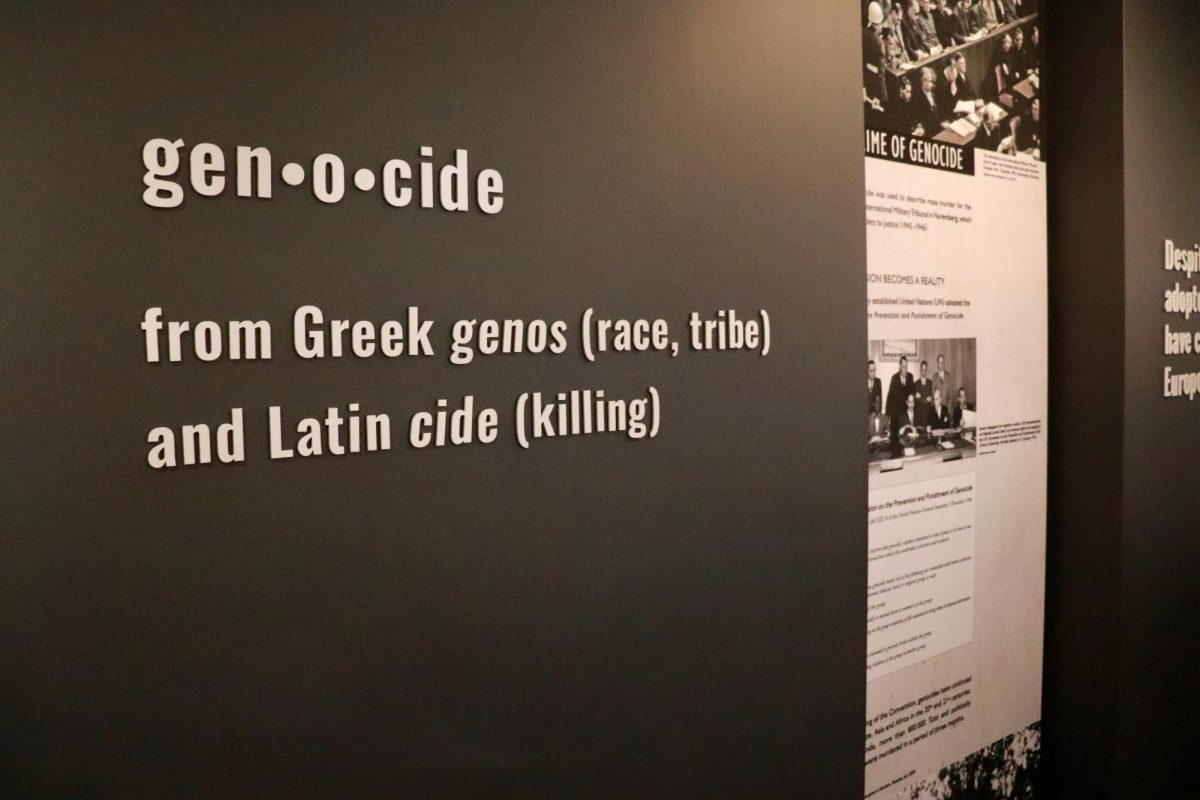








Imagine a future where four out of every 10 of our leaders believe violence is an appropriate response to opposing speech. Sounds like a bit of an issue, right? Well, that’s the future we are facing right now — studies show an astounding 39% of college students today believe violence is acceptable to prevent hate speech. This is a concerning rise within the last five years, where it has gone from one in every five students feeling this way in 2020 to now over one in every three.
Two months ago, we saw the result of this mindset in the horrific assassination of Charlie Kirk; a murder that resulted in celebration and claims that Kirk “got what he deserved” by George Washington University students. This is more than an isolated instance, however. It’s the signal of a growing trend in the youth population. Students more than ever are choosing two things: silence or violence — both of which are destructive not only to our core American principle of free speech but to democracy as a whole. When students are taught a curriculum built on separating society into black and white figures of oppressor and oppressed with no gray in between, political extremism is perpetuated. This, combined with the dangerous idea that hate speech (or any opposing speech, recently) is as damaging as physical violence, leads to this declining free speech society we find ourselves surrounded by.
In a recent study, a trend was identified that 70% of students believe that speech “can be as damaging as physical violence” and Republican students self-sensor more. As time goes on, these political trends are blurring. While I haven’t witnessed many of these trends on our campus, I can’t help but wonder if it’s because there are people who feel a need to censor themselves to prevent being judged or even called titles like “racist” or “fascist.” As the future of this country, we young people need to remember that free speech is the key to our democracy — for if this trend continues, our society built on civil discourse will devolve into one of physical conflict.
