
















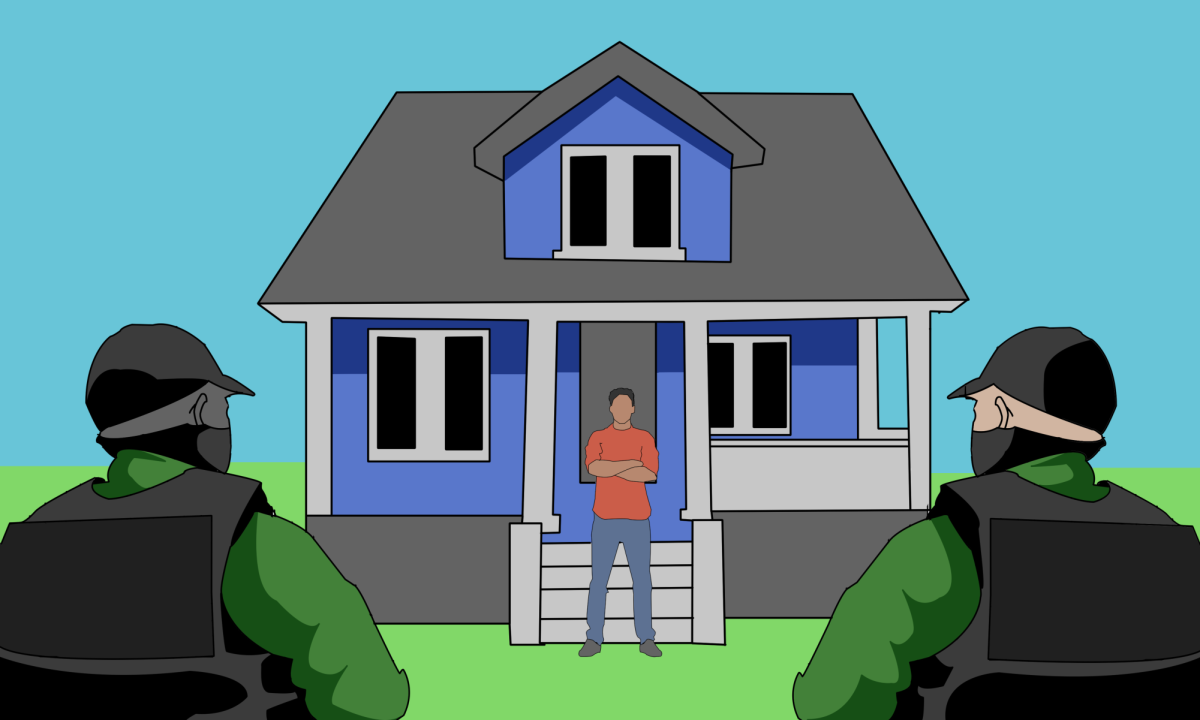
The Stanford Center for Racial Justice recently stated Jan. 22, “the [Supreme] Court has signaled it will not stop the government from enforcing its immigration policies through tactics that include racial discrimination and physical violence.” Upon reading this, I wondered: How does this impact, and possibly construct, U.S. racial categories? The Supreme Court’s decision allows Immigration and Customs Enforcement agents to construct race. Racial classifications aren’t inherent. They are created by society. ICE’s use of racial profiling and physical abuse against those within custody represents the definition of harsh boundaries between who is and who is not white. Whiteness is defined in opposition to every other race by way of punishment against anyone in the U.S. who is not white.
The Noem v. Vasquez Perdomo decision allows ICE to profile individuals based on perceptions of whether they look like an immigrant. Investigative stops occur based on an individual’s perceived job, race or ethnicity, whether they speak Spanish or English with an accent and their location. The approval of racial profiling allows ICE to target non-white-appearing individuals.
This race-based system of suspicion is physically enforced by violence. The American Civil Liberties Union reveals “an unfolding humanitarian crisis” at Fort Bliss military base in El Paso, Texas, the country’s largest immigration detention site. Conditions include reports of extreme and unlawful use of force, including sexual abuse, chronic food shortages, scarce hygiene supplies, a lack of medical care and inadequate access to counsel and legal services. While Noem v. Vasquez Perdomo allows ICE to classify individuals as nonwhite, Fort Bliss physically enforces perceived racial differences.
Noem v. Vasquez Perdomo allows ICE to profile individuals they perceive as nonwhite. ICE agents’ actions construct a boundary between who appears white and who does not, placing nonwhite-appearing individuals closer to threats in detention centers like Fort Bliss. Contrastingly, individuals who appear white are not burdened by this threat. White and nonwhite people are being identified and simultaneously distinguished from one another.
