





















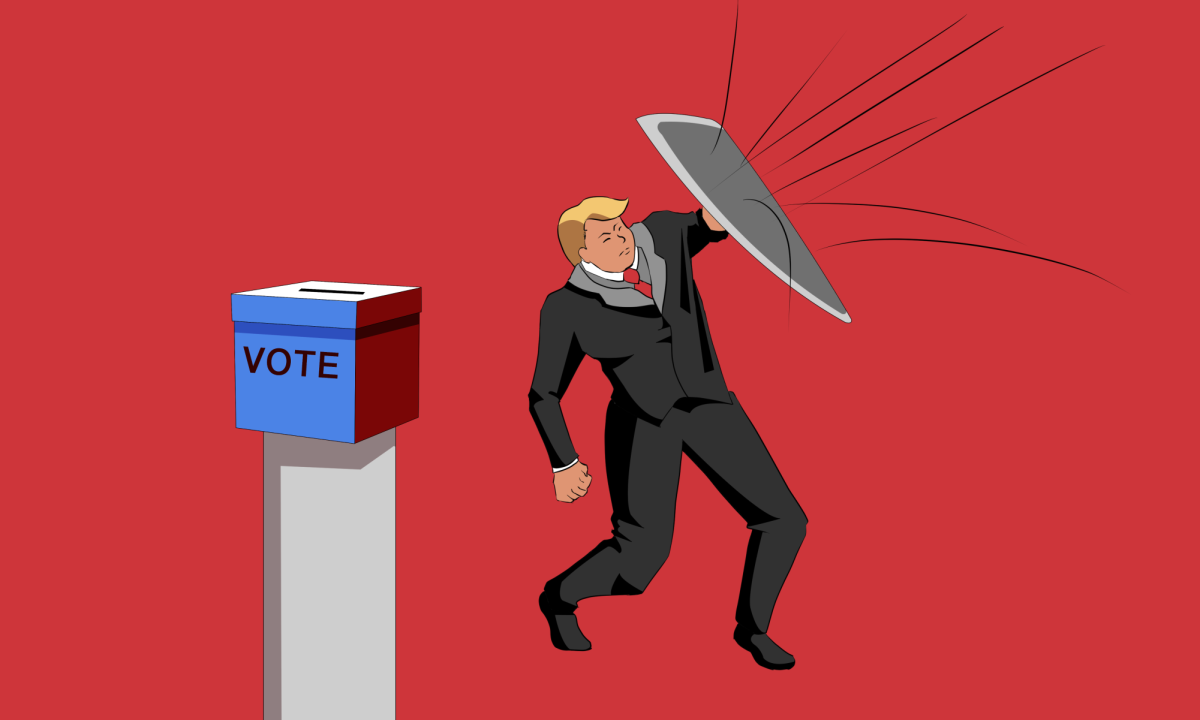
As the 2026 midterm elections approach, President Donald Trump has, again, presented himself as the defender of democracy. He claims sweeping actions are needed in order to protect the integrity of our elections. This rhetoric follows a familiar pattern for him. After the 2020 presidential election, he promoted baseless fraud claims, despite being told repeatedly by advisers, courts and the U.S. Justice Department that no evidence supported them.
In a recent interview on a conservative podcast, Trump urged the Republican Party to “take over the voting” in at least 15 jurisdictions, suggesting the federal government should run elections in places he claims are corrupt. Recently, he’s also said he’d only accept the midterm results if he deemed them to be “honest,” tying the legitimacy of democratic outcomes to his own assessment rather than to transparent, impartial processes.
The backlash Trump faced was swift. Officials in Pennsylvania reaffirmed that state governments control elections and rejected interference from Washington. Even some Republican lawmakers, including Sen. Ron Johnson, pushed back, emphasizing that federal takeover proposals conflict with constitutional authority and basic norms of federalism.
Still, backlash means little without consequences. Despite criticism of Trump’s remarks, no sustained institutional response has constrained him. Congressional Democrats have limited themselves to statements and procedure, leaving the challenge unresolved. The 2025 government shutdown tested whether opposition leaders would impose real costs in defense of democratic norms. They didn’t.
When institutions don’t respond forcefully to attacks on democracy, those attacks become normalized and can lead to chaos, just like it did Jan. 6, 2021. If a president can question the legitimacy of laws and face only symbolic resistance, the system begins to bend around him. Recent actions by state leaders, including California’s Proposition 50, suggest growing recognition that restraint may no longer be sufficient.
The midterms won’t just be an election; they’ll be the test of whether American democracy can defend itself. Can our institutions and leaders hold strong when faced with a president and a loyal party willing to bend the rules to secure his own advantage? Hopefully.
