

















Physical space reflects social themes, and controlling it is an exercise of power. Race decides who preserves space and for whom they preserve it. Past and present policies preserve spaces occupied primarily by white communities and disregard spaces occupied primarily by historically marginalized communities.
In the past, the interstate highway system and redlining aimed to marginalize minority neighborhoods. Following the Federal Aid Highway Act of 1956, planners of the interstate highway system designed highways directly through these communities. Redlining exemplified a similar theme. Redlining, the now-illegal and formerly federally backed practice that began in the 1930s, drew “boundaries around neighborhoods based on residents’ race and depriving them of resources and opportunities,” embodying structural racism.
Monopoly over physical space reflects racism. Transportation and residential structures shape who had access to space to retain their neighborhoods and resources and who did not.
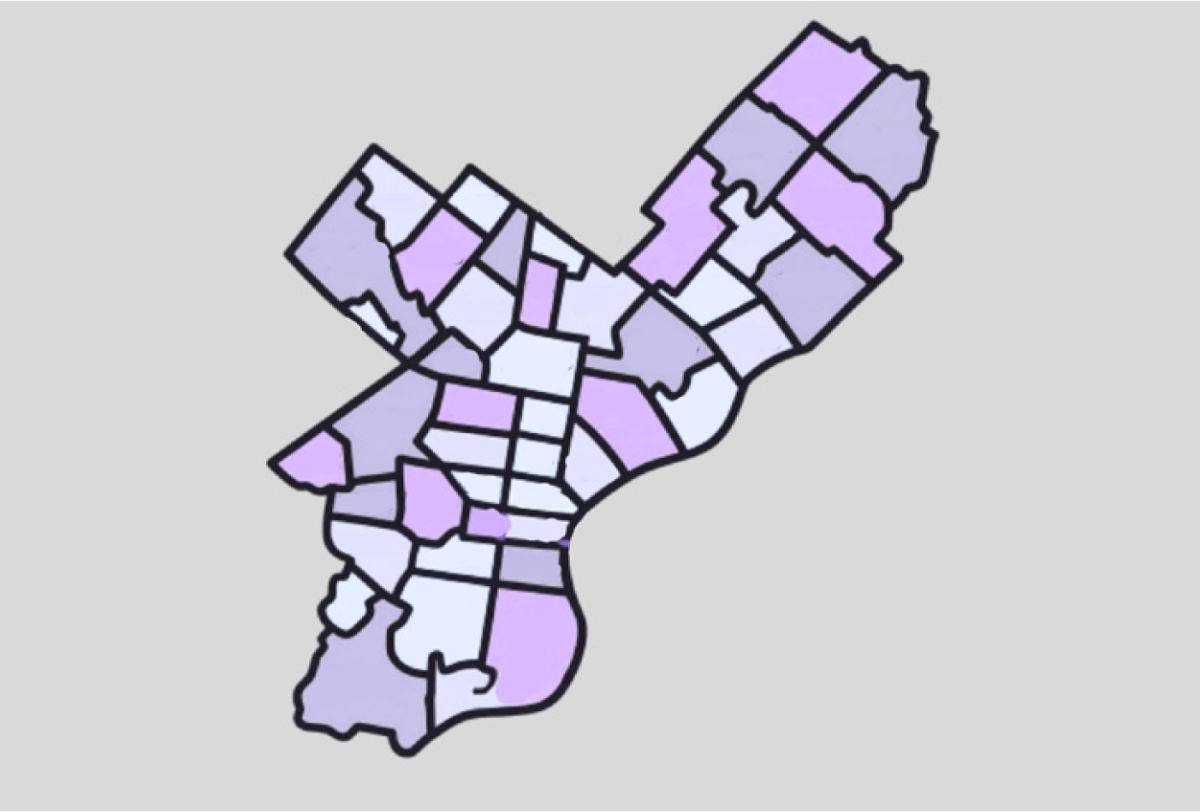
Today, Philadelphia’s neighborhoods containing a majority of people of color face a lack of walkable routes and racial integration. Spatial racism is still prevalent and illustrates how quality and use of space are divided along racial lines. Philly’s public transportation enables these racial disparities. University of Pennsylvania’s graduate Luke Coleman noted in his thesis that SEPTA is “not sufficiently effective in counteracting the effects of segregation on wealth-building for low-income communities and communities of color.” The present is stained by historical and intentional policies that gave white neighborhoods greater space-dependent resources than neighborhoods made up primarily of people of color.
Past and present structures and policies dictate who has access to reserved, maintained and resourced spaces and who does not. The interstate highway system and redlining enabled a spatial separation and disregarded communities of color. Spaces primarily occupied by white communities continue to have access to geographically-contingent resources that other neighborhoods do not. Access to physical space and its resources, contingent on racism, determines everyday experiences and moments. We have a personal responsibility to alleviate these inequalities.
