















The university introduced new recommendations for faculty hosting academic events and inviting outside speakers to campus in an email sent to faculty March 9.
The documents are called the “Shared Principles of Academic Inquiry” and the “Resources and Guidelines for Hosting Academic Events.”
“The Shared Principles of Academic Inquiry and the Resources and Guidelines for Hosting Academic Events reflect a conviction Saint Joseph’s has long held: that rigorous intellectual inquiry and genuine care for our community are not in tension, but they depend on each other,” Jean McGivney-Burelle, Ph.D., provost and senior vice president of academic affairs, wrote in a statement to The Hawk.
In the March 9 email, McGivney-Burelle said a working group “comprised of administrative and faculty leaders from across the University” collaborated to create the documents, which are guidelines and not formal policy. They apply to university employees, faculty and staff.
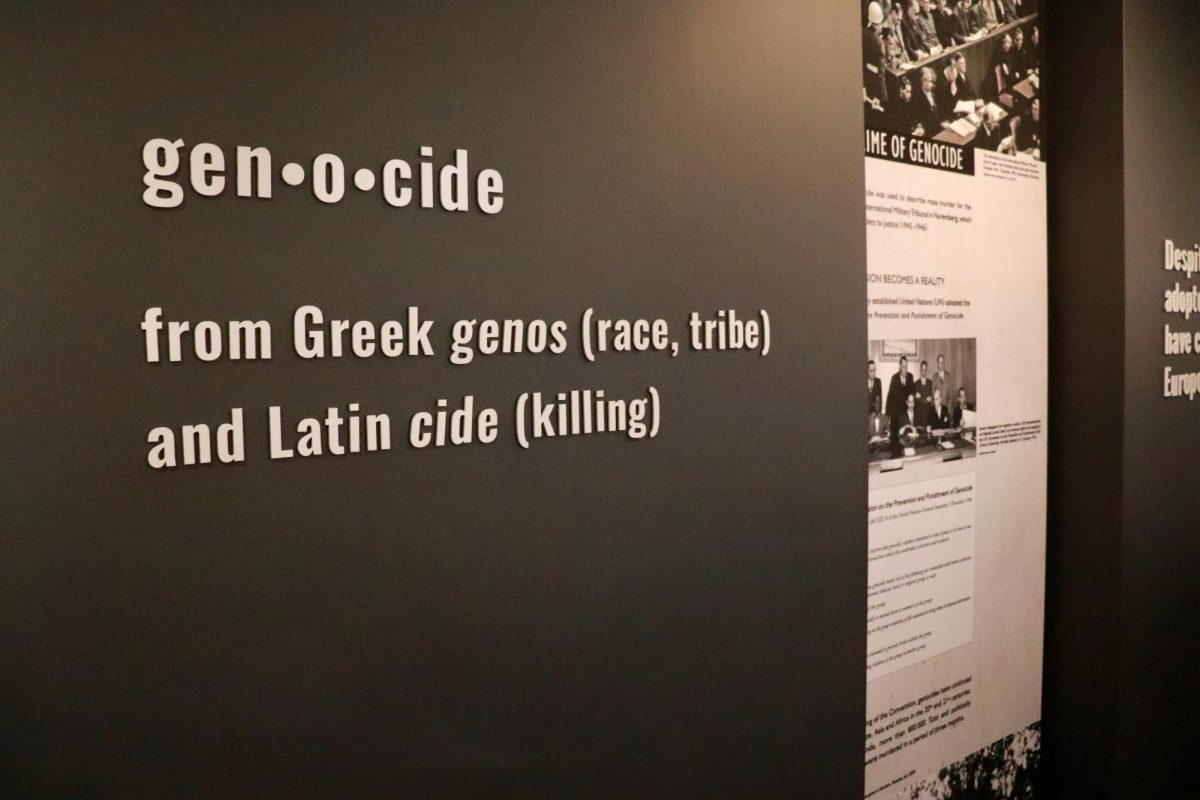
Despite speculation that the guidelines were produced as a result of the cancellation of an event last October titled “A Legacy of Genocide,” James Carter, Ph.D., dean of the College of Arts and Sciences, said the documents were reflective of a broader need of the university.
“[The guidelines] were in response to a general need to develop and articulate guidelines for free academic inquiry on campus, not in specific response to this one event,” Carter wrote in an email to The Hawk.
Clint Springer, Ph.D., associate professor of biology, president of the Faculty Senate and part of the working group of administrative and faculty leaders, said the document is meant to reaffirm the university’s dedication to academic freedom while giving event organizers a framework for navigating controversy or external pushback.
“We’ve been seeing institutions around the country dealing with these same kinds of issues,” Springer said. “I’m really pleased that we dealt with them in a way that allows us to continue to have our academic freedom, but also maintains a way for the university to function in the world that we operate currently.”
Christopher Kelly, Ph.D., professor of sociology and criminal justice and vice president of St. Joe’s chapter of the American Association of University Professors — a nationwide union of academic faculty with a mission to promote academic freedom — said the guidelines are not an enforceable policy.
“It was not approved through the typical governance process,” Kelly wrote in an email to The Hawk. “Rather, these are guidelines that may or may not be adhered to until such time when the principles contained within the document become inconvenient.”
Springer said he opposed a formal policy from the beginning.
“I was pretty adamantly against a policy for this kind of thing when I was approached about it to begin with,” Springer said. “The reason for that is that I don’t want someone to have the power to censor a scholar or any kind of academic inquiry. That’s not what we do here.”
McGivney-Burelle said the guidelines are designed to support faculty, not restrict them.
“Our position on academic freedom is unambiguous,” McGivney-Burelle told The Hawk. “These guidelines exist to support organizers, not to gatekeep ideas. Early coordination with University partners ensures that when events tackle complex or sensitive topics — as they should — our community is prepared to engage with confidence.”
Mike Lyons, Ph.D., associate professor and chair of the department of communication and media studies, said overly cautious action can turn into “prior restraint or censorship.”
Lyons said he does not view the guidelines as requiring prior approval for bringing speakers to campus and sees no penalty for faculty, making them advisory in nature.
“It’s right up to the line, but I don’t think it crosses the line,” Lyons said. “In the climate that we’re in now, I understand why they’re doing it.”
Even so, Lyons said depending on how the guidelines are implemented in the future, there could be consequences.
“This could go out of control, where, ‘Now do I have to report every time I bring somebody on campus to make sure it’s okay?’” Lyons said.
Springer said the guidelines are ultimately a response to outside pressures, not internal ones.
“This is not intended to limit anyone in what they’re hoping to explore, the conversations they’re hoping to hold, but also that it’s really a response to external pressure … We are all deeply committed to — and I believe that — to academic freedom and inquiry on campus, and this is showing that support,” Springer said.
Discomfort in learning is not something the university aims to avoid, McGivney-Burrelle said.
“What we seek to eliminate is not discomfort, which is an essential part of learning, but harm,” McGivney-Burelle said. “We take our responsibility for the safety and well-being of our community seriously.”