











Safety concerns resulted in the university canceling an Oct. 27 viewing of a livestreamed lecture that was part of Georgetown University’s “The Gaza Lecture Series.”
Kevin Gfeller ’20, associate director of public relations, said the screening was canceled because of the “likelihood of serious outside disruption.’’
“The decision was made solely by university and academic leadership in response to safety concerns — not the content of the lecture — and should not be interpreted as limiting academic freedom,” Gfeller wrote in an email to The Hawk.
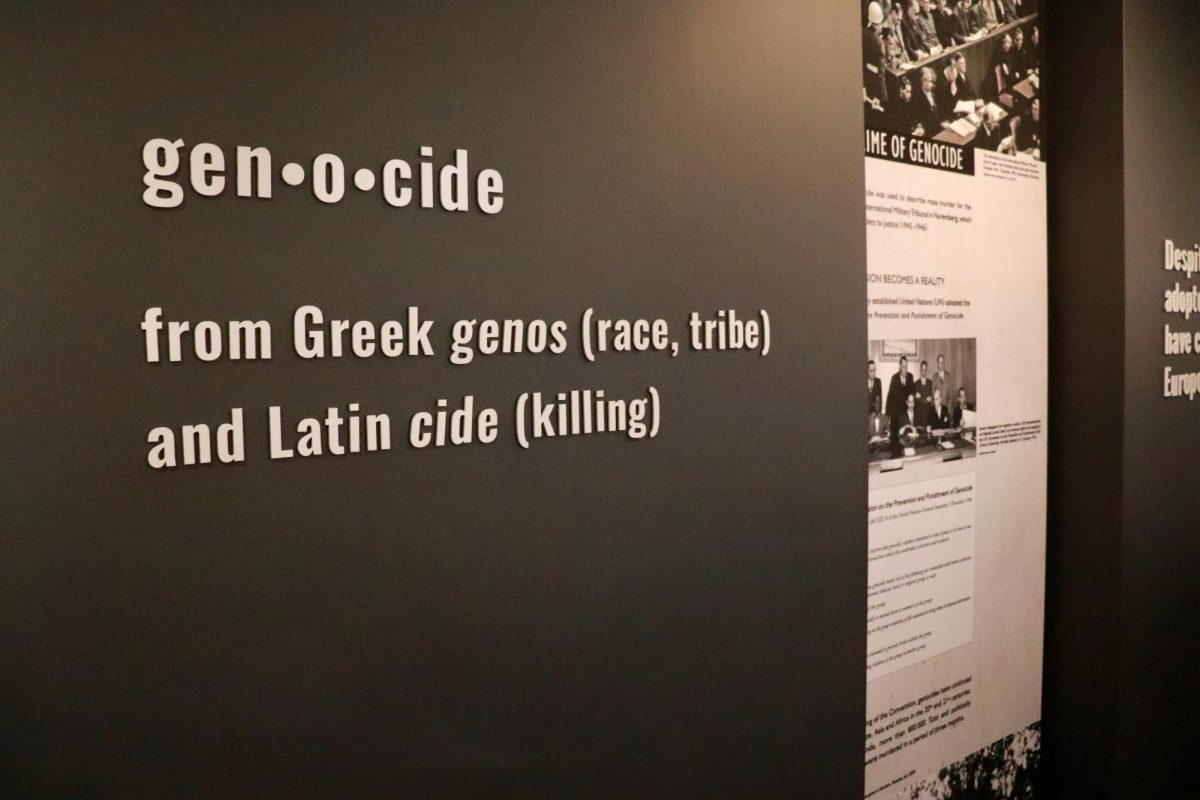
The lecture, titled “A Legacy of Genocide,” was delivered by Jason Stanley, a professor of philosophy at the University of Toronto. Stanley is the son of Holocaust survivors and a supporter of a “just resolution of the Israel-Palestine conflict.” According to Georgetown’s online description of the event, Stanley would discuss “the legacy of genocide for this fraught moment in American politics and what the crisis in Gaza portends for the future of international affairs.”
Co-sponsored by St. Joe’s department of history and department of theology and religious studies, screenings of Georgetown’s “The Gaza Lecture Series” were first livestreamed at St. Joe’s during the fall 2024 semester and continued through the spring 2025 semester with the Oct. 9 lecture, “The Hundred Years’ War on Palestine: A Lecture by Dr. Rashid Khalidi.” Discussions moderated by St. Joe’s faculty have followed the viewings.
Umeyye Isra Yazicioglu, Ph.D., associate professor of Islamic studies and organizer of the lecture series livestreams, said she thinks the Oct. 27 viewing was canceled “because of the politics of fear.”
“They tried to censor a talk on Gaza genocide by a world-renowned Jewish philosopher with expertise on genocidal language and with moral clarity as a person shaped by the Holocaust,” Yazicioglu wrote in an email to The Hawk. “It is unfortunate that the university caved into their threats and canceled the event. We are a university, and a Jesuit one at that, and we have to live up to our scholarly and moral standards.”
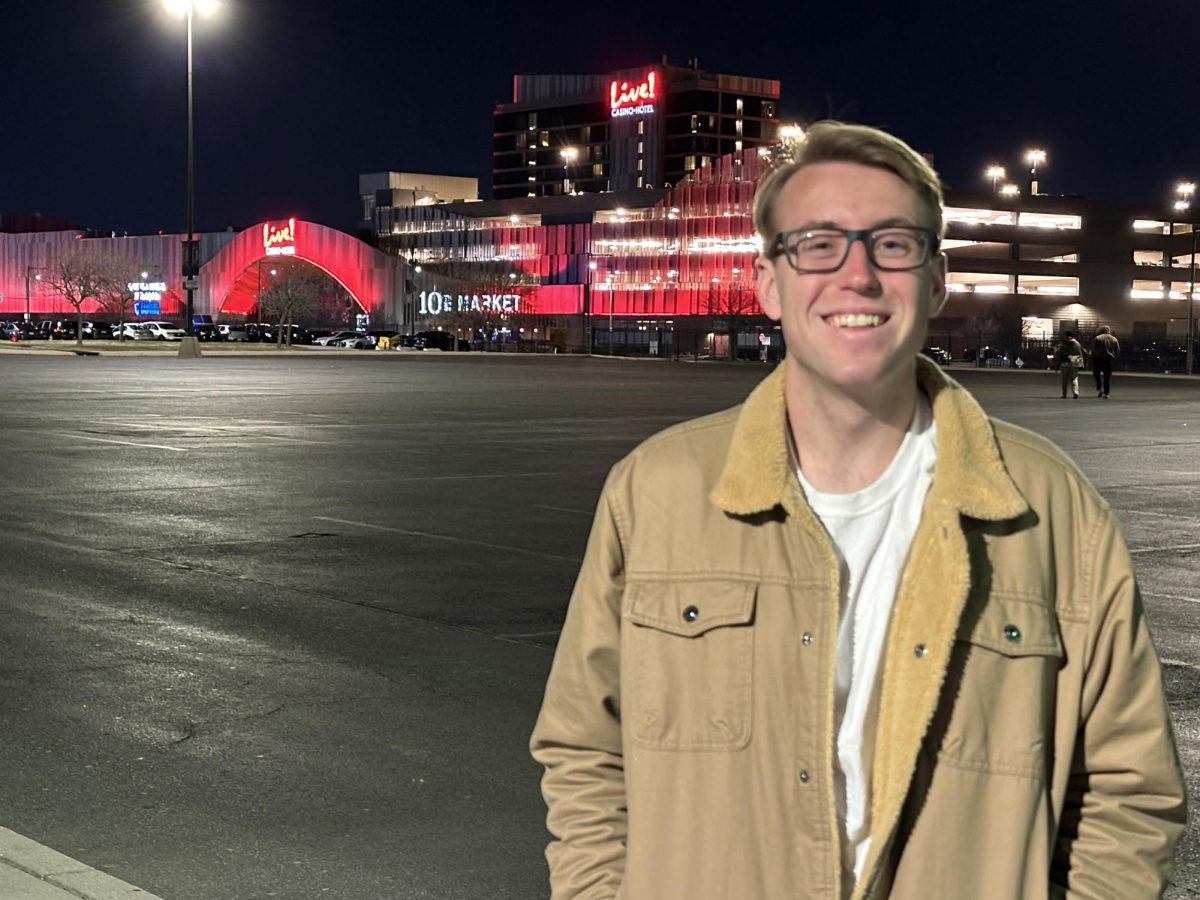
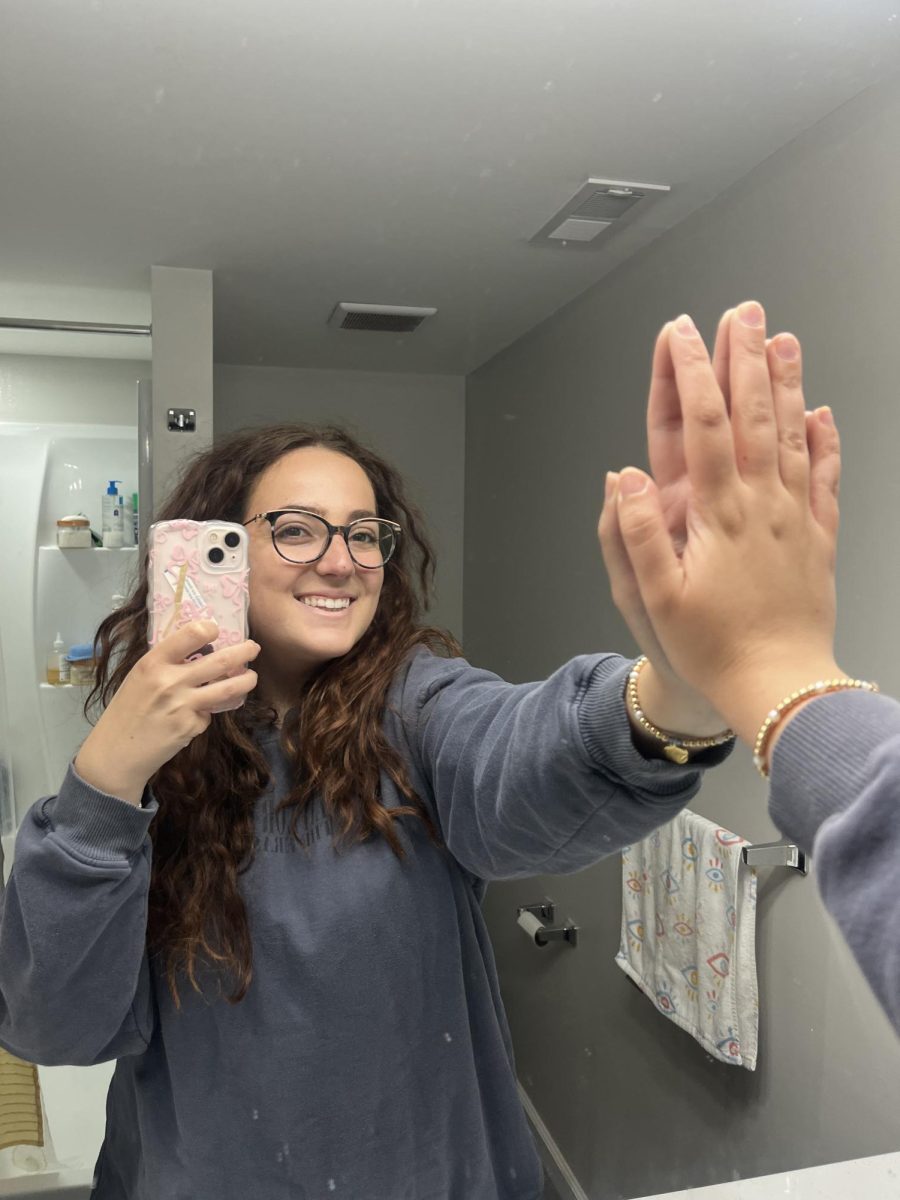
When students Liam Riley ’26 and Caitlin Curran ’27 heard about the cancellation, they decided to host a viewing of the lecture themselves. The livestream was projected at the time and location the university-sponsored screening was originally planned. About 20 members of the St. Joe’s community attended.
“It’s important for us to make sure that this information is still accessible to all students at St. Joe’s in a way where it can be discussed in a community format,” Curran said.
Curran said she and Riley were informed about the threats Oct. 24, three days before the viewing was scheduled to occur.
“The university at no point put out a statement to the students about this event being canceled or why it was canceled,” Curran said. “The only way we discovered was through word of mouth and alternative sources.”
Riley said he and Curran understood the difficulty of addressing the issue and the time constraints involved. However, the university’s cancellation of the event, Riley said, sets dangerous precedents about intimidation and restriction on campuses.
“I think once you let an intimidation campaign be successful, it invites that kind of activity, and it enables that behavior,” Riley said.
At the beginning of the lecture, moderator Nader Hashemi, Ph.D., director of the Prince Alwaleed Center for Muslim-Christian Understanding and associate professor of Middle East and Islamic Politics at Georgetown University, took a moment to recognize St. Joe’s students who had organized the viewing event.
Hashemi, who is also a coordinator of the lecture series, described the cancellation as “historically unprecedented.”
“I’ve never heard of it before,” Hashemi said. “I have heard of other cases where someone invites a speaker to a campus, it generates controversy and, for whatever reason, that invited speaker doesn’t come. But this is a very different and unique case because it wasn’t a case of inviting a speaker to campus. This was simply Zooming and broadcasting an event on a topic of global concern to another group of students.”
Hashemi also called the threats that led to that censorship a “grotesque act.”
“It’s, in many ways, a reflection of this deep authoritarian moment that we are going through in this country, where democracy is under assault, and, specifically, universities are under attack because of the question of Palestine, because of the attempt to censor any open and public debate on the Israel-Palestine conflict,” Hashemi said.
Emphasizing the vitality of free dialogue on college campuses amid outside threats, Curran said the viewing was about offering a platform for discussion.
“As a university, our behavior and the way that we educate our students, our faculty members and our administrators should be consistent despite whatever else is happening in the government and in the country, and the freedom that we have to do that should be maintained no matter what,” Curran said. “This event was meant to demonstrate that.”
Gfeller said the university “will begin a planning process to develop future programming surrounding these issues, doing so in a way that is safe, constructive and promotes understanding.”
Riley said he continues to have hope in university leadership and that he and Curran understood that many factors influenced the cancellation.
“I’m sure that everyone had similar intentions to ours,” Riley said. “But it’s our job to make sure that something like this doesn’t happen in the future.”
Hashemi, urging individuals to advocate for free expression when threats arise, said “the stakes here are enormous.”
“This is not simply about the cancellation of one lecture,” Hashemi said. “This is very much about the future of democracy in the United States.”
Luke Sanelli ’26 contributed to this story.

Zazai • Nov 1, 2025 at 8:24 am
To people who make threats and try to intimidate those supporting Palestinians,
You will only make it worse for yourselves, much worse . That ship (where you think these antics work ) has sailed long ago.
Its getting too late now