





















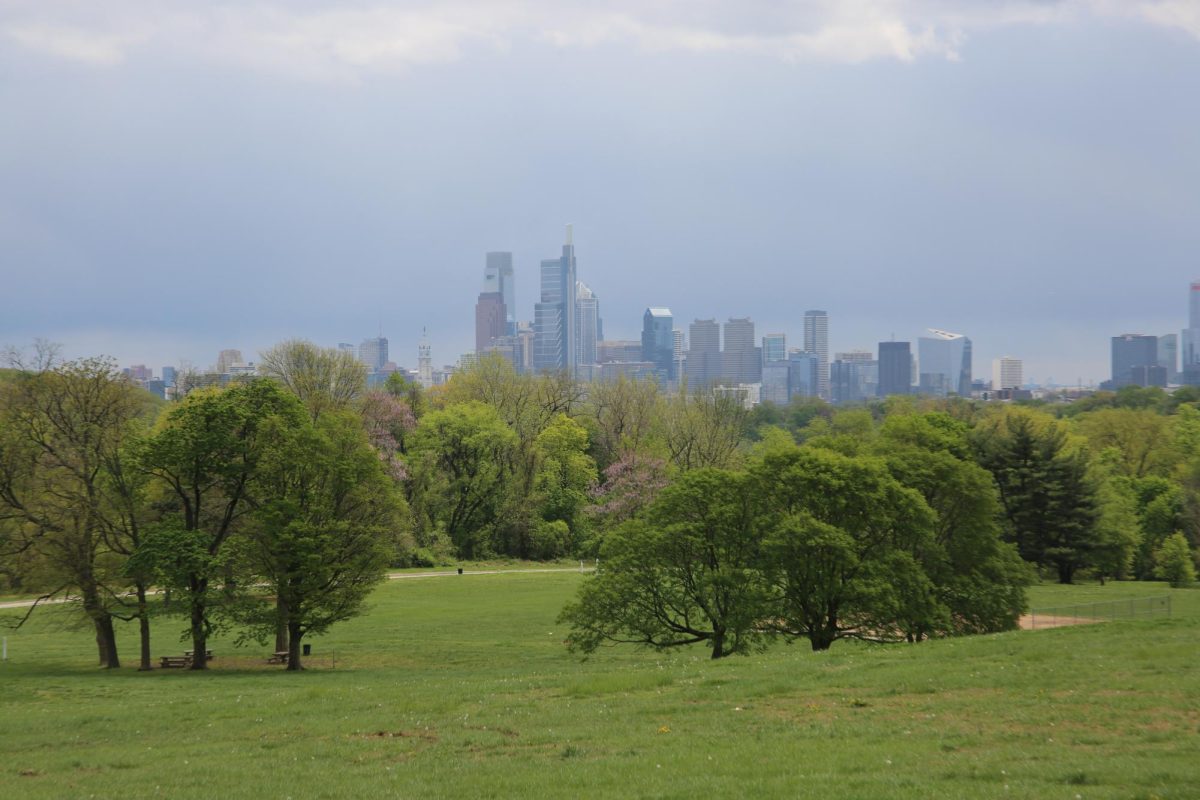
Fifty-six years ago, about 30,000 people gathered in Philadelphia’s Fairmount Park for the first Earth Day rally April 22, 1970 — one of thousands across the U.S.
In the post-war decades leading up to the first Earth Day, industrial pollution had become more prominent, manifesting in oil spills and poor air quality. Protest movements took root, and more and more people became concerned with the environment.
Jeffrey Hyson, Ph.D., assistant professor of history, said U.S. Senator Gaylord Nelson organized a steering committee in light of these concerns that planned events for a nationwide environmental teach-in — including in Philadelphia. Hyson said these groups were primarily run by students.
“One of the best legacies of Earth Day for college students is that college students were some of the most important organizers of the first Earth Day,” Hyson said.
The University of Pennsylvania had its own group — the Earth Week Committee of Philadelphia — composed of students, faculty and community leaders who helped organize educational events for a week-long celebration.
The Committee was founded by a group of graduate students. The events in the week leading up to Earth Day were intended to educate those in the Delaware Valley region on environmental issues and concerns.
At the end of the week, a rally was held at Belmont Plateau in Fairmount Park April 22, according to the Earth Week Prospectus found in the Penn’s Archives & Records Center. The “Earth Walk” event, as it was called, was open to the public to participate.
Scott McRobert, Ph.D., professor of biology, was in the crowd that day. A student at Radnor High School at the time, McRobert was “excited by the environment as a topic.” He said he and his friends decided to attend the event, not expecting its later impact.
“When we went to Earth Day, we never thought it was ever going to be again,” McRobert said. “We never thought there’ll be another one. And we never thought it would be a thing that would sort of spread globally and that there’d be Earth Day all around the world.”
McRobert was a part of a group in his high school called Clean Up Radnor Environment.
“We used to go walk up and down Lancaster Avenue every Saturday and pick up trash,” McRobert said. “That was our environmental movement.”
Hyson said Philadelphia, in the decades leading up to Earth Day, had been dealing with environmental harms in the form of river and air pollution as a result of the various industries housed in the city. Not only were people beginning to be concerned about the effects pollution had on health, but on the environment, as well.
“Natural features are part of [Philadelphia’s] attractiveness, but those very natural features [were] being undermined by the industrial developments that pollutes the air and pollutes the rivers and pollutes the land,” Hyson said.
Earth Day resulted in a myriad of changes on the national scale. By 1980, the U.S. government passed numerous pieces of environmental legislation, including the Resource Conservation and Recovery Act, the Clean Air Act, the Clean Water Act and the establishment of the Environmental Protection Agency.
At the local level, McRobert said environmental activism in Philadelphia was, and is still, doing “spectacular” work for the city.
“If people want to get involved in the environment, they should start out by seeing what’s available right here in the city,” McRobert said.
However, according to Hyson, many of the accomplishments since the first Earth Day have faded due to recent rollbacks of federal environmental regulations, such as withdrawing the U.S. from the Paris Agreement.
Hyson said these rollbacks have “galvanized environmentalists” and raised environmental concerns among younger generations in particular.
Green Fund, St. Joe’s student-run environmental conservation organization, has pushed for sustainability at St. Joe’s. Green Fund planned numerous events over the course of April to celebrate Earth Month, including workshops on environmental justice and sustainability, a science fair and a forum with SEPTA and the Clean Air Council.
Catie Jones ’27, president of Green Fund, said the organization has increased awareness about environmental concerns and established tangible efforts for sustainability, such as installing water refilling stations and tables with solar panels.
Jones said while environmental rollbacks have upset the public, they rouse people to advocate for what they believe in.
“In the face of adversity, I think that turnout does usually get higher and that it really does increase how people may want to turn out because they’re being challenged,” Jones said.
For Jones, this initiative doesn’t end on Earth Day.
“I feel like every time I go on Instagram during Earth Day, everybody’s posting photos of the Earth, caring for it,” Jones said. “But also, [we should be] taking the messages of Earth Day and carrying them through to everyday life. It’s not just one day. Earth Day is every day.”