





















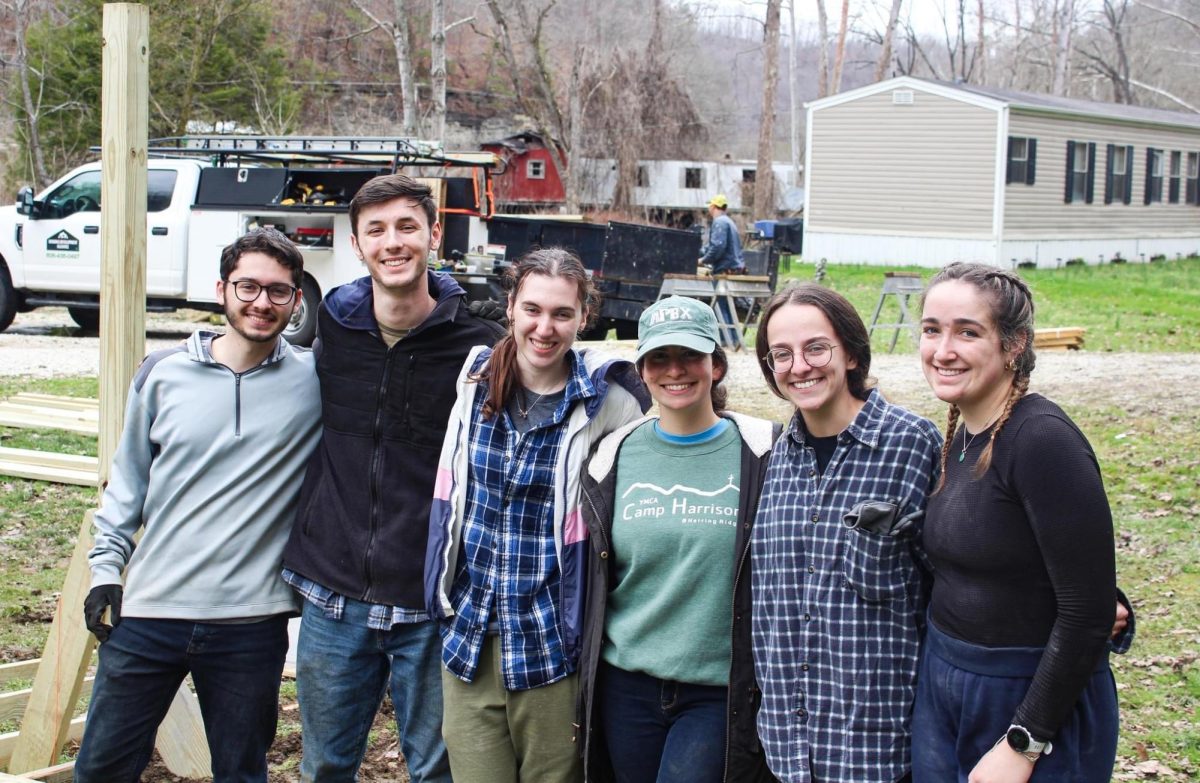
In March 2023, a St. Joe’s van with 14 students pulled up in front of the town hall in Alleghany Highlands, Virginia, just a half-hour drive from the western border with West Virginia.
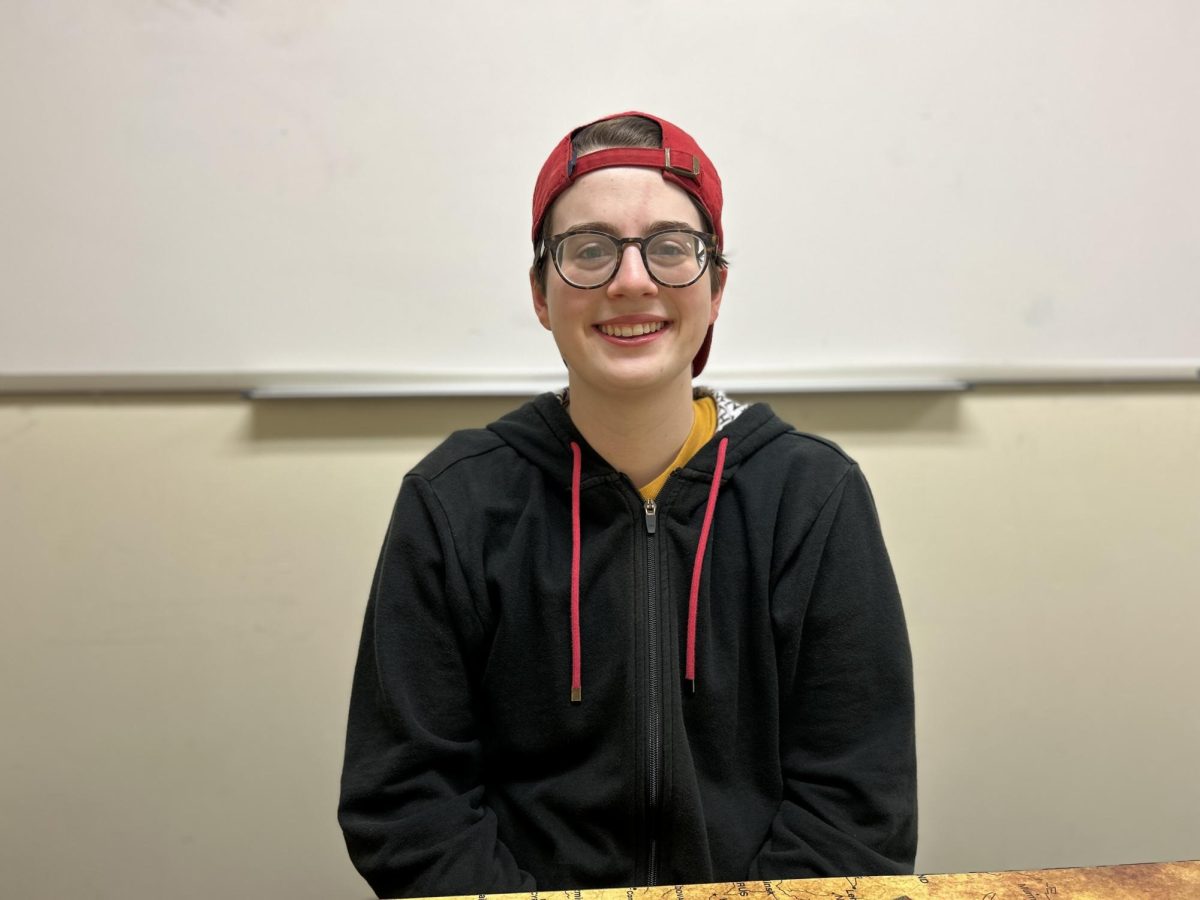
Alex DiGiacomo ’26, who was stuffed into that van with the others, was nervous about the week ahead.
DiGiacomo had signed up for the Appalachian Experience the evening of the very last day of registration the previous October. In meetings with his group leading up to their immersion, there wasn’t a lot of talking, something the extroverted DiGiacomo was worried about.
“I was like, ‘Oh gosh, what did I get myself into?’” DiGiacomo said.
The group unloaded downtown and walked into the town hall, chattering more now. Inside, one long table was set up with food, the smell of Appalachian barbecue wafting into DiGiacomo’s nose. He piled chicken, mashed potatoes and green beans onto his plate and sat down.
DiGiacomo and his group members sat interspersed with the over 20 Alleghany Highlands community members present, making conversation and laughing with one another.
“Everyone was at one big table, and you just happened to be talking to whoever happened to be around you,” DiGiacomo said. “It truly was like we assimilated right into their community.”
The Appalachian Experience, or APEX as it’s more commonly known, is a Campus Ministry-run service program wherein students spend their spring break immersing themselves in the Appalachian region. In the weeks before and after, students learn about the history and culture of Appalachia.
DiGiacomo was drawn to the program because of its hands-on nature. He can’t quite recall how he heard of it, just that it piqued his interest.
“I had the ability to go to a part of the country I’d never seen before and also really get hands-on with service and social justice in a way that I hadn’t experienced before,” DiGiacomo said.
Tricia Riordan, campus minister for the Appalachian Experience, said APEX is all about putting Ignatian values — reflection, solidarity, service, justice and education — into action.
“Ultimately, at the heart of this, we’re learning from the communities we serve,” Riordan said. “We’re learning about ourselves and how we engage service.”
Leading up to the immersion, student leaders organize activities for the week spent in Appalachia. Then, all participants meet to discuss the Appalachian region and the site. Once they return home, students reflect on their time.
Just a couple weeks before St. Joe’s students made their way to Alleghany Highlands in 2023, town officials put a notice out in their local newspaper asking residents, most of whom lived there their entire lives, what they needed done around the town. People answered, and DiGiacomo and his peers spent the week building sandboxes, mulching playgrounds, doing highway cleanup and completing other maintenance tasks needed around town.
During their time there, the students also learned about the town’s history — Alleghany Highlands was an important stop on the Chesapeake and Ohio Railway. They learned about the effects of the coal and railroad industry and what that meant for the town.
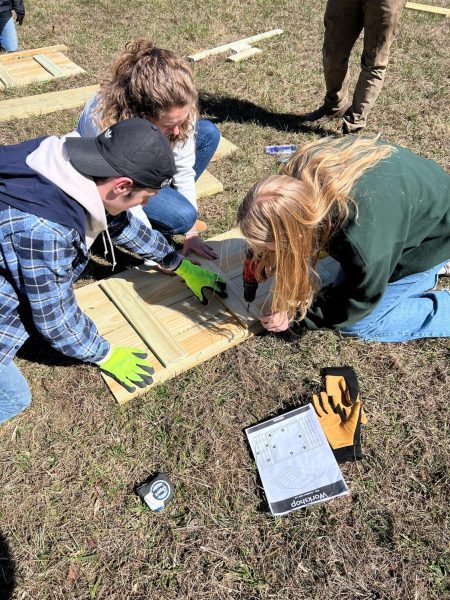
DiGiacomo stuck with APEX after that week in 2023 and has participated every year since.
“There was something about it, both the fun I had that week and the sense of mission that I had gotten from just that first experience,” DiGiacomo said. “I thought to myself, there’s no reason not to keep doing it.”
In spring 2025, DiGiacomo returned to Virginia as a group leader and led students during a week in St. Paul, tucked into the southwest tip of the state. Matthew Lucero ’26, one of DiGiacomo’s participants, said DiGiacomo always ensured group members felt comfortable. At no point did the group members work separately from one another.
“I think that’s what Alex really wanted most from us,” Lucero said. “That we were able to collaborate and work together.”
DiGiacomo said they didn’t do as much manual labor in St. Paul as he had in years previous, instead having conversations with community members in their homes or playing dodgeball at the local elementary school.
But being in St. Paul deepened DiGiacomo’s understanding of service. DiGiacomo said he and his group had many conversations pondering what service really is.
“Ultimately, to me, service boils down to giving up your time and effort when you don’t need to because somebody needs it more,” DiGiacomo said.
Each site is unique, and the type of service can be different, Riordan said.
“Sometimes, our service is really about being in the community and just talking to the community, and we call that a service of presence,” Riordan said.
Josh Thoemke, executive director of Apple Ridge Farm in Copper Hill, Virginia, whose focus is on assisting underprivileged kids through various programs, said APEX participants are a valuable addition to the work Apple Ridge Farm does.
“The relationship that we’ve built with SJU and with the kids that have come through the APEX program, it’s become a part of our mission down here,” Thoemke said.
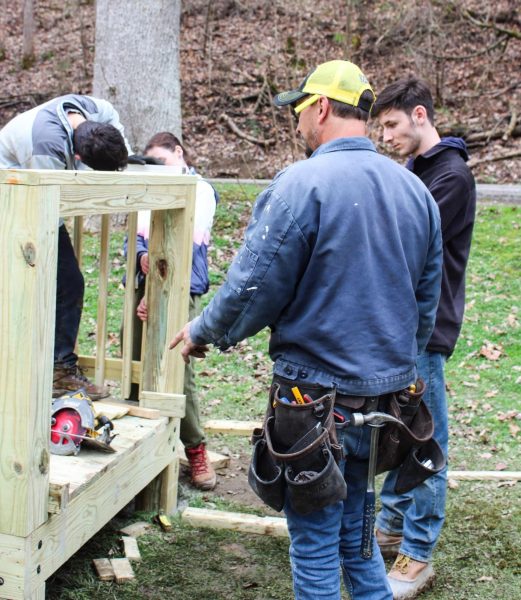
This spring, DiGiacomo, one of three student coordinators for the 2026 program, will be going to Bluefield, West Virginia, where service will consist of working in schools. An aspiring high school biology teacher, DiGiacomo is excited to be working with students.
DiGiacomo noted that, like any service immersion program, APEX isn’t perfect. Being in charge often means grappling with issues of saviorism. And saviorism is not the goal.
“When you’re engaging with any sort of social injustice or something like a service immersion program, it’s not completely pretty,” DiGiacomo said. “I think if it was, you would only be able to do that by operating with the savior complex, but then it would only be pretty for you and not any of the people you’re impacting.”
Instead, the goal, DiGiacomo said, is to be “with and for others,” citing the Jesuit mission. Advocating is important, but it’s also important to understand that being with the people they are advocating for is just as important, if not more.
“At the end of the day, if you only get to know people for an injustice that they face, you’re not really getting to know them, and you’re worrying more about the injustice than the person,” DiGiacomo said.
DiGiacomo said he actively reminds himself and others that APEX is about experiencing Appalachia in its barest form.
“We always say we don’t go to Appalachia to fix anything,” DiGiacomo said. “The heart of an APEX experience is not the service that we do. It’s the people we encounter.”