











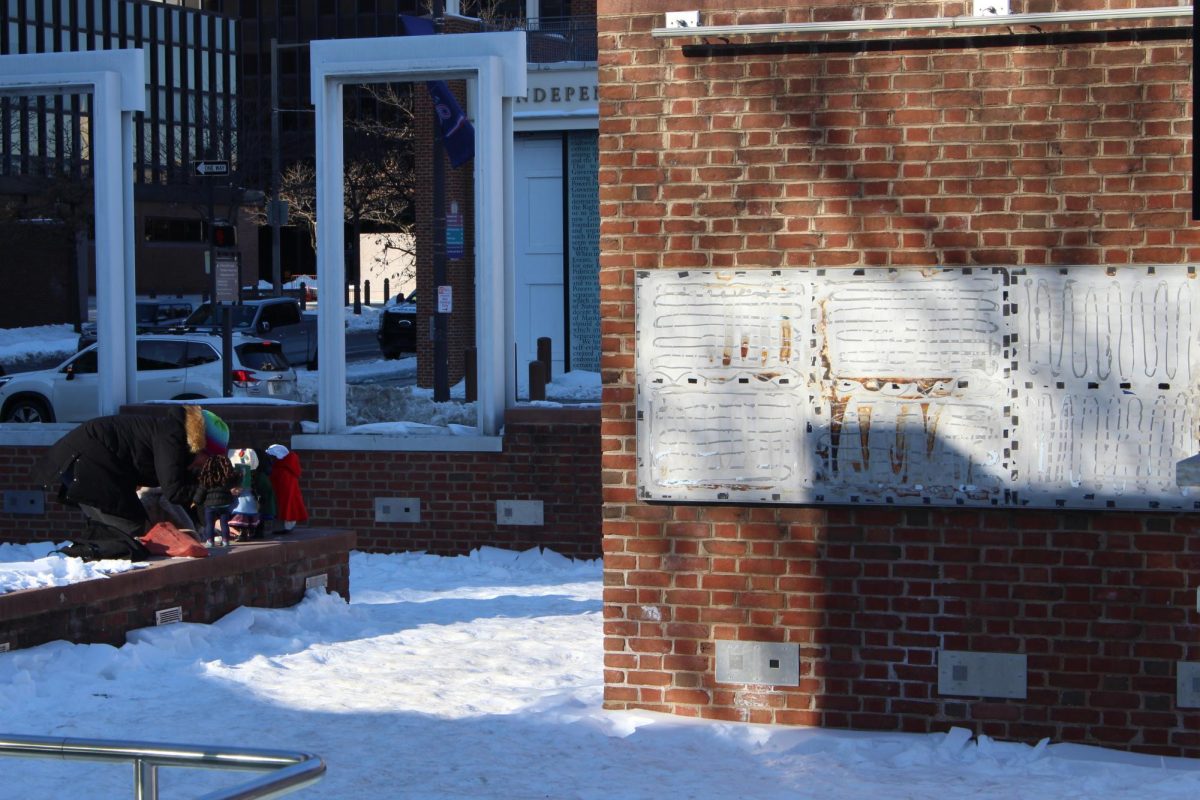
Plaques telling the stories of the enslaved people held by George Washington at his Philadelphia home, known as The President’s House, were removed with crowbars and assorted tools by National Parks Service employees Jan. 22.
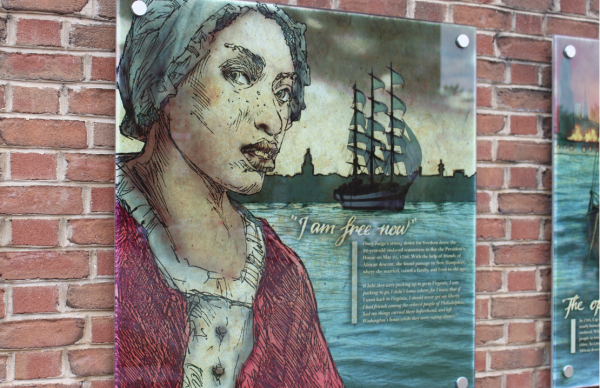
The plaques included information about the enslaved people George Washington brought from his Virginia plantation to Philadelphia to work in his home as cooks, seamstresses, stable hands and more. They displayed illustrations of enslaved people and their experiences in early America, including Ona Judge, Martha Washington’s personal maid who escaped in 1796.
The removal followed a March 27 executive order to ensure NPS sites did not contain content that may “inappropriately disparage” Americans.
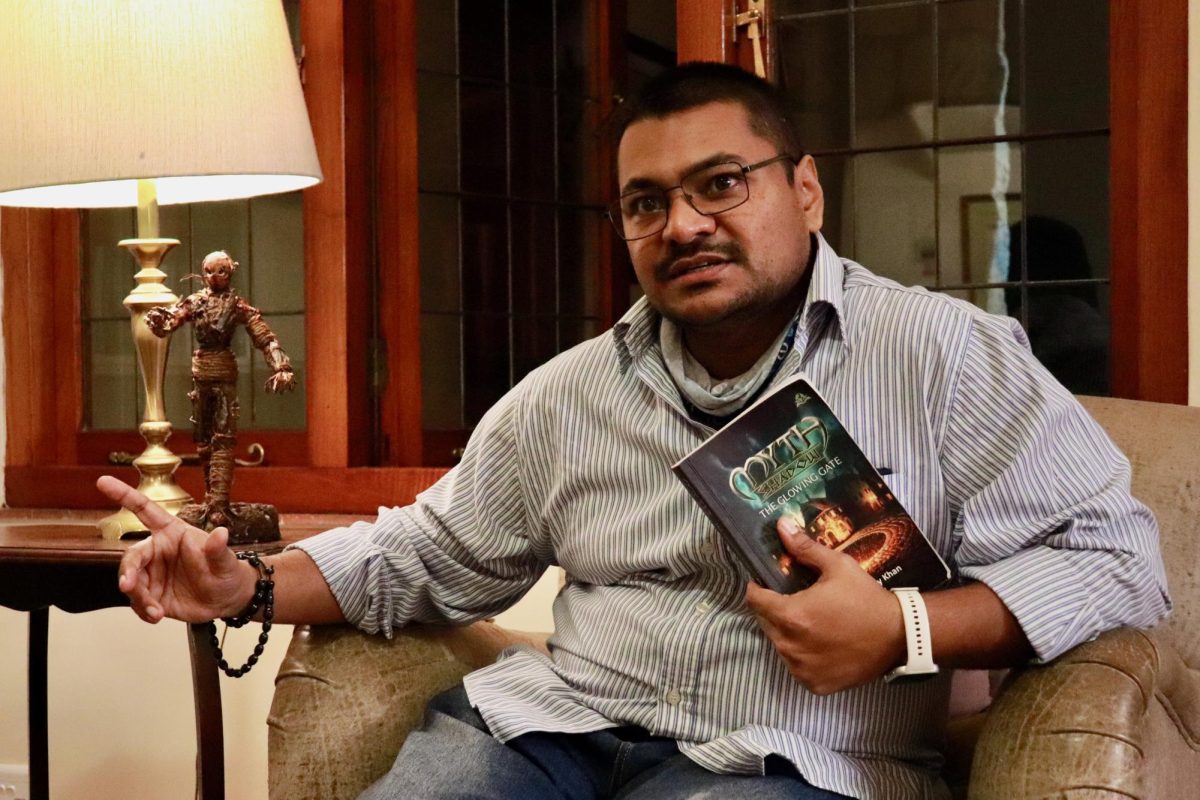
Michael Coard, a criminal defense attorney and co-founder of the Avenging The Ancestors Coalition, a group dedicated to preserving the history of Washington’s enslaved people, characterized the plaques’ removals as “blasphemy.”
“For us, that site was a historic, hallowed site,” Coard said. “And for these vandals to come with crow bars was absolutely outrageous.”
Mayor Cherelle Parker announced Jan. 27 that the City of Philadelphia had filed a federal lawsuit Jan. 22 requiring the federal government to restore the site. Parker said the city was filing a preliminary injunction to stop any further damage to the President’s House site.
A public hearing was held Jan. 30 on the city’s request for a preliminary injunction. Coard said ATAC had filed an amicus brief, which would allow ATAC to support the city’s case in court.
U.S. District Court Judge Cynthia Rufe visited the site and saw the interpretive panels Feb. 2. Coard said that it could be several weeks before Rufe makes a ruling.
Members of ATAC have been meeting every day since the plaques were removed, Coard said. The organization also announced an “aspirational” 30-day plan of action Jan. 27 titled, “Tell the Truth. Restore our History.”
“What we’re calling for is this: One, to restore the facility,” Coard said. “Two, to enhance the facility. And three, to replicate the facility. When we say restore, put it back like it was. When we say enhance, make it bigger and better. When we say replicate, we mean do the same kind of thing at different sites all across the country.”
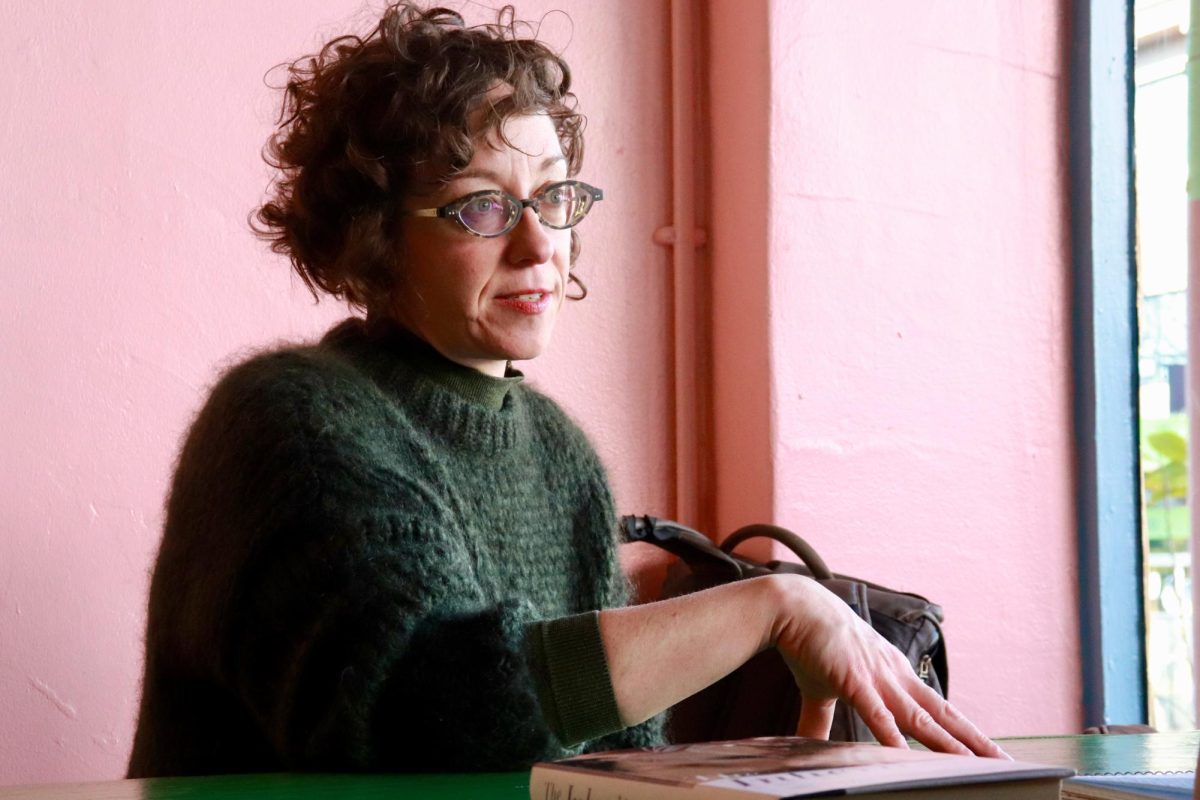
Randall Miller, Ph.D., professor emeritus of history at St. Joe’s, who has advocated on behalf of and worked to bring light to the President’s House’s history for over a decade, said he was not surprised by the plaques’ removal but was angry.
“It’s an open attack on who we are as a people, and that’s just hard to take in any circumstance,” Miller said.
Susan Feenan, a Philadelphia architect, visited the site Jan. 30 to read aloud for passersby content from the removed plaques that she had found online. A small crowd gathered around Feenan, listening to her recite information about the enslaved people owned by Washington.
“At this point, we still have free speech, and storytelling is part of history, so why not just stand here,” Feenan said. “And even if there’s nobody here, I’m putting it out there into the atmosphere.”
Brian Yates, Ph.D., professor of history and director of American studies at St. Joe’s, said the plaques’ removals and the Trump administrations’ attempts to control narratives in American history reminded him of “fascist periods in European and American history.” However, Yates also said removing the plaques may also bring more attention to the President’s House.
“I think it’s going to produce the opposite result than what the Trump administration wants,” Yates said. “More people are going to have a better understanding of a more accurate picture of American history.”
Luke Sanelli ’26 is scheduled to serve as moderator on the upcoming panel discussion on Philadelphia’s President’s House, organized by America250@SJU.
Correction: The Hawk incorrectly reported the name of Avenging The Ancestors Coalition as Avenge The Ancestors Coalition.